 Loading... Please wait...

Categories
 New Products
-
 $115.90

-
 $59.90
-
 $59.90
-
 $217.90
-
 $689.90
Our Newsletter
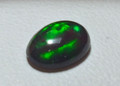
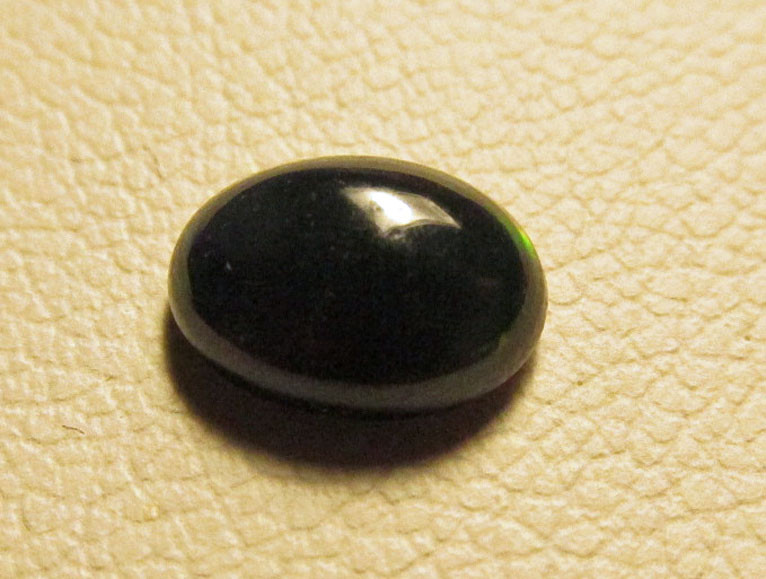
1.09 ct. Coober Pedy Djanggawul Black Opal Cabochon - A Master Suite Gemstone Spell Box Find - The Voodoo Estate


)
Price:
$115.90
Brand:
Condition:
Used
Weight:
336.00 Grams
Shipping:
Calculated at checkout
Product Description

~ Voodoo Priestess Estate ~ ©
Nearly twenty-five years have now passed since we were called to do an estate that had been closed up for seventeen years! The Voodoo Estate! This type of call usually gets us excited as they are a treasure trove. Located here in Florida, there was no electricity or running water so we rigged our own lighting and in we went. If you have ever seen the Adams Family you will have some idea as to what we were greeted with! Then the attorney handling the liquidation gave us some background. The estate had belonged to an alleged powerful Voodoo Priestess/JooJoo Exorcist, grand daughter of a Marie Laveau, and favored daughter of a Marie Glapion.
These names meant nothing to us, but the late night talk of Voodoo and exorcism in the old mansion was enough for us to spend the night in a hotel and return in the morning to assess the estate. The rest is history.
There was no feeling of dread or unwelcome in the mansion, however there was quite a bit of contraband and other items we can or will not sell here.
We would later piece together that this box, and others like it, were stored in hidden window boxes that allowed her to control their exposure to the sun, moon, Rahu and Katu. She claimed that bathing them in the energies of these physical bodies and Chhaya Grahas at certain specified dates and times would have a cleansing, and or 'charging' affect on the stones.
The Opal
Her journals and inventory tell us this is also one of a group of opal cabochons ground for her by an unnamed Mexico City, practitioner, follower, lapidary, from stones obtained in 1958 from a young man who claimed to be a holy man with sacred stones to sell. "He was actually a Kupa Piti miner with raw opals to sell." She writes in one entry, and in another she tells us this bizarre story; "The Djanggawul were brother and sisters, two girls, one boy, who created Australia. They came from Beralku and made the sacrad talisman opal by breaking off pieces of their vulvas." She goes on to write, "little did this little thief know how close this was to the truth."
"Bathe the stone in the light of the full moon before wearing it in youthful regeneration."
~!~
This black opal cabochon was ground and polished into an oval cabochon shape from natural crystal opal rough that was mined in the Coober Pedy.
Coober Pedy
From Wikipedia, the free encyclopedia, for the most part...
Coober Pedy is located in South Australia. In the 2016 Census, there were 1,762 people in Coober Pedy. Of these 962 were male and 801 were female. There were 302 Aboriginal and/or Torres Strait Islander people that made up 17.1% of the population.
The town is sometimes referred to as the "opal capital of the world" because of the quantity of precious opals that are mined there. Coober Pedy is renowned for its below-ground residences, called "dugouts" which are built in this fashion due to the scorching daytime heat. The name "Coober Pedy" comes from the local Aboriginal term kupa-piti, which means "boys’ waterhole."
The first opal was found in Coober Pedy on 1 February 1915; since then the town has been supplying most of the world's gem-quality opal. Coober Pedy today relies as much on tourism as the opal mining industry to provide the community with employment and sustainability. Coober Pedy has over 70 opal fields and is the largest opal mining area in the world.
Aboriginal people have a long-standing connection with the area. The first European explorer to pass near the site of Coober Pedy was Scottish-born John McDouall Stuart in 1858. The town was not established until after 1915, when opal was discovered by Wille Hutchison. Miners first moved in about 1916. By 1999, there were more than 250,000 mine shaft entrances in the area and a law discouraged large-scale mining by allowing each prospector a 165-square-foot (15.3 m2) claim.
The harsh summer desert temperatures mean that many residents prefer to live in caves bored into the hillsides ("dugouts"). A standard three-bedroom cave home with lounge, kitchen, and bathroom can be excavated out of the rock in the hillside for a similar price to building a house on the surface. However, dugouts remain at a constant temperature, while surface buildings need air conditioning, especially during the summer months, when temperatures often exceed 40 °C (104 °F). The relative humidity rarely gets over 20% on these hot days, and the skies are usually cloud-free. The average maximum temperature is 30–32 °C (86–90 °F), but it can get quite cool in the winter.
Coober Pedy is a very small town, about halfway between Adelaide and Alice Springs. It has become a popular stopover point and tourist destination, especially since 1987, when the sealing of the Stuart Highway was completed.
Visitors attractions in Coober Pedy include the mines, the graveyard and the underground churches (the Serbian Orthodox Church and the Catholic Church). There are several motels offering underground accommodation, ranging from a few rooms to the entire motel being a dug-out. The first tree ever seen in the town was welded together from scrap iron. It still sits on a hilltop overlooking the town.
~!~
This genuine opal cabochon has a very fine quality color play. It has no dyes, glues, lamination's, or treatments of any kind. It is a rare quality flawless black opal cabochon with natural very fine internal color play with flashes of blue, green and red color play inside as you turn the gem.
~!~
There are 19 photographs below to tell the rest of this tale.
Rest assured your order will be carefully packed to withstand the onslaught of the most deranged of Postal Workers.
International Buyer's, Please email us for a Shipping Quote.
Payment is due at listing end.
Check our other listings and sign up for our newsletter as new items are usually listed daily.


~!~
Our photographs are never enhanced or manipulated.
Above taken with incandescent light, below with broad spectrum led, ultra violet and infra-red lighting.
~!~





