Loading... Please wait...

Our Newsletter


Khmer Phra Bua Khem - Mekapat Phra Upakut- Love and Luck Talisman - A Black Pyramid Vèvé Room Find - The Voodoo Estate ~!~ ~!~ SOLD! ~!~ ~!~
  • Image 1
  • Image 2
  • Image 3
  • Image 4
  • Image 5
  • Image 6
  • Image 7
  • Image 8
  • Image 9
  • Image 10
  • Image 11
  • Image 12
  • Image 13
  • Image 14
Price:
$229.90
Condition:
Used
Weight:
109.03 Grams
Shipping:
Free Shipping

Sorry but this item is currently unavailable.

Please check back at a later stage.


Product Description


~ Voodoo Priestess Estate  ~ ©

Khmer Phra Bua Khem - Mekapat Phra Upakut
 Love and Luck Talisman

A Black Pyramid Vèvé Room Find

~!~
This is another of our very long listings with an abundant text and 14 photographs, so please sit back and read the write-up through.  If you have come this far, we are sure you will find it was worth the wait.
 
It has now been nearly twenty-four and a half years ago since we were called to do the estate that had been closed up for seventeen years.

The Voodoo Estate! 

This type of call usually gets us excited as they are a treasure trove.  Located here in Florida, there was no electricity or running water so we rigged our own lighting and in we went.  If you have ever seen the Adams Family you will have some idea as to what we were greeted with!  Then the attorney handling the liquidation gave us some background.
 
The estate had belonged to an alleged powerful Voodoo Priestess/JooJoo Exorcist, grand daughter of a Marie Laveau, and favored daughter of a Marie Glapion.  These names meant nothing to us, but the late night talk of Voodoo and exorcism in the old mansion was enough to make us decide to spend the night in a hotel and return in the morning to assess the estate.  The rest is history.
 
Our research has shown that this woman was what she claimed and was indeed descended from a long line of well known Vodoun family originating in New Orleans in the early 1800's.  We were pretty unnerved by this until we discovered they were also devout Catholics!  Although I have to admit this was unlike any Catholic home we have ever been in and some of the items found inside were a little more than disturbing.
 
There was no feeling of dread or unwelcome in the mansion, however there was quite a bit of contraband and other items we can or will not sell here.
 
This is one of a few pieces from this estate we will be listing this week, so check our other listings.
 
We will, upon the new guardian's request, issue a named Letter of Authenticity with each lot from this estate, complying with the terms set forth to us by the estate's attorney.

Some Back Story 

Found in what we have named "The Black Pyramid Vèvé Room."  This room was an interesting work of architecture.  Windowless and located just above the Main Ballroom in the center of the mansion, it was only accessible through a large trapdoor and cast iron spiral staircase from the storage room above it.  The floor was four feet below the Main Ballroom ceiling, well concealed by the baroque architecture.  The architect had concealed the room in the floor above by surrounding it with four guest suites, it was dead center in the mansion.
 
Measuring exactly twelve feet x twelve feet with a twelve foot ceiling, the room was well concealed, but it was stifling down there as there was no ventilation, the only air coming from the trap door above and that was not very much.  Painted black, with ebony flooring and paneling, the contents of the room consisted of seven, LiDiex Black Glass and Silver, charging pyramid boxes and their contents.  Only a few of us went into this room to recover and inventory the contents and none of us could stay in there for more than a few minutes, it was, well, disorientating.  This was another room with no wiring for electrical power and on the floor were the remnants of previously used vèvé's that we assume were drawn with the chalky powder found in one of the pyramids.
 
The remaining six pyramids contained an interesting assortment of jewelry, gems, mineral specimens and a host of eclectic curiosities that she kept inventoried in a separate journal concerning the ceremonies conducted in this room.
 
The pyramids ranged in size from 9" x 9" x 7" to 3' x 3' x 2.2', so this was a massive undertaking as most of these were too big, heavy and/or fragile to get out of there safely, full as they were.
 
In these journals she makes some fantastic claims concerning these items.  She continues with entries that read, " I have used these pieces to awaken psychic perception and mystical awareness and have found them to strengthen my memory and as an aid in dreaming. I continue to receive insight and inspiration from these pieces." 
 
And; "many of the ones awakened have sought refuge here, most being complacent in their worlds.  They will come if called to a blood match."
 
~!~
 
We can attest that pieces from this room have shown to possess some remarkable attributes or association with what might be called paranormal activity.
 
Some of those who have had access to these items or even their photographs have said they have felt disorientated or ill, some perceived, felt, saw, sensed, dreamt of, etc., at the very least movement in the stones, many times directly related to them, but you be the judge.
 
~!~

Khmer Phra Bua Khem - Mekapat Phra Upakut
 Love and Luck Amulet

Her journaled inventory tells us this amulet was procured by the 1888 LiDiex, "a gift from the monks of the Wat Mahathat" in 1945.  It is one of five such amulets he received from them. 
 
 ~!~
 
Coincidentally, where and whenever those associated with this estate happened to be, we find criminal, political and, or religious events have taken place.
 
At the end of the World War II, the collaborationist leadership of Thailand, which included Marshal Plaek, was arrested and tried for war crimes.  Democratic elections for the entire People's Assembly were first held, and the young King Ananda Mahidol returned to Thailand for the first time in seven years.  King Ananda Mahidol had just come of age, turning 20 in September of 1945.  He returned with his mother and Prince Bhumibol in December of 1945.
 
A new constitution, Thailand’s most democratic to date, was drafted in his honor.  Pridi Banomyong called it the constitution that gave the Thai people the most complete democratic rights.  The differences with previous constitutions were the House of Representatives would, for the first time, be fully elected by the people (176 members).  A Senate of eighty members was also established, which would, unlike the British House of Lords, be elected by the House for six year terms.  Active civil servants and soldiers were also banned from serving in the Parliament or Cabinet, reducing the power of the military.  A ban on senior princes from participating in electoral politics was repealed, precluding only the King and four other people from politics.
 
The Constitution was promulgated in 9 May 1946.  One month later, in 9 June 1946, the King was found shot to death.  His death was soon followed by a military uprising in 8, November 1947 that abrogated the 1946 constitution.
 
~!~
 
1888 LiDiex
 
 
The research generated by this estate provides continuous fascination.  The procurer of this amulet, was a man known only as "LiDiex," a 4th. generation descendant of the original Man Known Only as "LiDiex," who had come to these shores as a survivor and saboteur of the slave Ship Henrietta Marie in 1701.  He then found his way to New Orleans to meet with the young parents of the then infant grandmother of our priestess, Marie Laveau.  It is said he facilitated this disaster using egg shells to cast a spell, and certain folklore concerning egg shells corroborate this.  The original LiDiex was a wood carver and furniture maker as were most of his descendants.
 
This is another case of the multi-generational relationships we have encountered with the families associated with this estate, as the LiDiex all had a strong association with these women.
 
He is the least mentioned of the LiDiex in her journals, yet he kept a suite of rooms with her from his sixteenth birthday.  Apparently he would leave for periods lasting up to a decade before returning, shutting himself in her estate for lengthy periods before leaving again.  There is no record of the death of this LiDiex.
 
He is attributed with the design and consecration of the, "Resurrection Skull Altar" and most of the ceremonial spells associated and used with it.  Her journals, and those of a number of her live in practitioner followers, most notably, those of the LiDiex, tell of this altar being used in ritual resurrection ceremonies.  There are some pretty fantastic tales of animating inanimate objects, particularly, a number of articulated skulls using specific minerals, potions, elixirs and reptiles. 


He is described in her journals as being, "in excess of six feet of sinewy muscle, deceptively strong, easily matching two of his size in their grappling" and, "extensively, shaved, tattooed and pierced" in addition to, "shown to be capable of high magic without devices."

Both their journals claim his ability to heal wounds, shape shift, travel through time and space, telepath and create life with the power of his thought.  They also corroborate the sharing of identities with a number of other LiDiex, "being a master of disguise and misdirection, often with his mere thought" according to these entries.  This gave these men the ability to appear two or more places at once, an old family ploy that was apparently often used by their Mistress.

It is this LiDiex who is attributed with making her introduction to Alexandra David Neel and his journals tell of numerous meetings and short adventures with her.  Claiming at the age of twenty four to have met Neel for the second time in the company of Prince Sidkeong of Sikkim and of being her teacher of the Tibetan language having already spent six years with the Great Hermit as apprentice.

 Much is already written on these subjects, so there is no need to elaborate here in this already overly long text, but we wholeheartedly recommend a cursory search for some very interesting reading.

~!~


Wat Mahathat

The history of this amulet prior to their acquisition is a fascinating study of Southeast Asian Buddhism and its sorcerer monks.  Wat Mahathat or Wat That, is officially known as Wat Pha Mahathat or Wat Si Mahatat.  It is the "Monastery of the Stupa."  It was founded by King Say Setthathirath in 1548, who also erected the imposing Lan Na style 'that' or stupa, that graces the ground in back of the sim.  This stupa-prasat style has a tiered square base surmounted by the stupa with square, octagonal and round tiers above.  The northern Thai influence can be seen in the golden umbrellas at the peak of the stupa and in many other places in the wat.

Its sweeping stair and entryway from Thanon Chao Fa Ngum Road and silver seven-headed naga is reminiscent of the more colorful and elaborated longer stairway at Wat Doi Suthep in Chiang Mai, Thailand.  The adjoining wat to the northeast, Wat Ho Xiang, has similar decorative design flanking its stairway.
 
The present sim, or viharn, was rebuilt between 1907 and 1910 by Chao Maha Oupahat boun Kong to replace the one that collapsed during a typhoon that struck during evening prayers in April 1900.  Many lost their lives in that tragedy which destroyed many of the wat’s buildings.
 
The sim, in Luang Prabang style, was rebuilt in 1910, and then restored beginning in 1963.  Recent work beginning in 1991 has created an attractive ornamental facade decorated with rosette columns.  There are interesting relief murals in its front portico and depictions of the legends of King Thao Sithoanh and the Nang Manola, the kinnari (divine half-woman/half-bird reputed for its frolicsome kindness) in addition to stories from the Phra lak phra lam (the Ramayana).  This is a popular Laotian legend of Khmer origin.  The sim has a double-tiered roof with a magnificent fifteen segmented "Dok So Fa" (or nhot so fa), a metallic ornamentation at the center of the roof beam.  The Dok So Fa symbolizes the universe and Mount Meru and is found on most Laotian sims.  This particular Dok So Fa consists of a series of pagoda forms.
 
There are statues of the Earth Goddess, wringing water from her hair, that recall the story of the Buddha when he was threatened by the army of evil spirits and called on her.  The water, accumulated from the meritorious deeds performed in his previous lives, drowned the entire Maran army.
 
Wat That has long served as one of the more significant wats in Luang Prabang.  During the Laotian New Year, leaders of traditionally important Luang Prabang wats (Mai, Xieng Thong, Aham and Vixun) had solemnly visited it by palanquin.  It still remains an important element of the religious structure of the city.  Within the confines of the wat also are the ashes of the revered Prince Phetsarath (believed by many to have had magically invincible powers as a half-deity, half-royal khon kong), who declared Laos independent after the Japanese surrender in 1945, and Prince Souvanna Phouma, his younger half-brother, who served as prime minister and sought to retain Lao independence in negotiations with the Pathet Lao.
 
~!~
 
But Back to the Talisman
 
Their journals have numerous entries describing the procurement and their use of these amulets and talisman.  The LiDiex journals describe its acquisition from the monks of  Wat Mahathat, it being one of twenty-six amulets gifted to him for performance of an unspecified task and donation on their behalf.  In one entry he writes, "Nine of the monks pledged their 'top' amulet as directed by the Abbot."  This unusual, Phra Upakut amulet being one of these twenty-six and one of five Phra Upakuts.
 
The LiDiex journals tell the oral tale as told him of this being one of the Phra Upakut amulets that had been found on the far side of the walled steps of Wat Prathat Doi Suthep, in Chiang Mai Provence by the gifting monk in 1927 and it was believed to have been made and left there by a Forest Monk who would spend the rainy season sheltered in the cemetery making him a cemetery monk.
 
~!~
 
Khmer Phra Bua Khem - Mekapat Phra Upakut
 
The legends of the Arahat Upagutta can be found in Somdet Phra Maha Samana Chao Kroma Phra Paramanuchit Chinorasa’s Pathama sombodhi katha.  Others are also mentioned in Kingkeo Attagara’s ‘The Folk Religion of Ban Nai’ and ‘The Legend and Cult of Upagupta’ by John S. Strong.
 
He was a Buddhist monk named Upagupta, (Phra Uppakhut in Thai) who preached and taught meditative practices throughout Northwest India over two thousand years ago.  He is venerated today as a protective figure endowed with magical powers.  In Thailand he is also called, ‘the Lotus Buddha’ or ‘the Buddha of the south’.  In northern Thailand they refer to him as ‘Bua Khem’.
 
His depictions usually show him seated in the Vajrasana position with his hands in the Bhumisparsha mudra, the gesture of touching the earth. He is often depicted in the act of getting ready to bind Mara, either still in meditation or just awakening from it.
 
Underneath the throne upon which the Buddha is seated there is often a stylized decoration of water plants, the lotus and in many examples a fish.  The fish, in connection with the Lotus Buddha is in reference to the legends which describe the origin of Phra Uppakhut from the sea.
 
The Thai belief  is Phra Upakut still  lives in Nirvana at the bottom of the sea.  Every Holy Day on the full moon he disguises himself as a novice monk accepting food offerings at dawn.  Whoever has a chance to offer him food will prosper and become rich.
 
Wat Uppakhut in Chang Mai was built with the permission of the Sangkha Act of 1902 (B.E. 2445).  A unique tradition performed at the temple is the offering presentation on full moon Wednesdays called the “Peng Put” rites.  This comes from the belief that whoever gets to present offerings to Phra Uppakhut will be blessed and become rich in a very short time.
 
“Loi Krathong”, a festival celebrated annually throughout southwestern Thailand is traditionally performed on the full moon night of the twelfth lunar month.  The floating of a ‘Krathong’, a banana leaf cup which floats away ill fortunes also expresses apologies to Khongkha or The River Goddess Ganga.  Some believers feel this ritual pays homage to the Buddha’s footprint on the bank of the Narmada River, while others say that it is to pay respect to Phra Uppakhut.
 
One of his key roles is to provide protection on the occasions of major Buddhist festivals (poi luang) when he is taken from the river and installed in a temporary pavilion in the temple grounds.  The famous Phi Ta Khon Festival or Ghost festival for example is held annually in the northern province of Loei.  It usually starts with a procession carrying Uppakut, and special white pebbles from the river to the temple.
 
He is a saint (Arahat) in the Sanskrit Buddhist tradition.  He is said to have lived in the time of King Asoka about 100 years after the death of the Buddha.  He was the third Buddhist patriarch and disciple of Ananda, who was the closest disciple of Buddha.  He is associated with miracles, supernatural powers and paranormal phenomena and is known as a great teacher through action and insight.  He was the legendary tamer of Mara, a feared deity, the ''evil one'' of  Buddhist tradition.  In mythology Mara symbolizes the notion of death in its broadest metaphorical sense, that is anything likely to keep an individual from Nirvana or within the realms of death and rebirth.
 
~!~
 

Many temples, in North Thailand, display a depiction of Phra Upakhut, also known as Phra Buakhem.  His most common imagery is that of  is an image of a sitting monk holding a begging bowl with his head turned upward to the right, while his left his hand holds the bowl and his right hand is slightly inside the bowl and covering it.

 Phra Upakhut is a protector against evil and a symbol of purity.  

The Origins of Phra Upakut

Our research revealed numerous origin myths pertaining to this monk.  He was an arhat who was praised by the Buddha for his magical powers.  Before the Buddha entered Nirvana, he asked Phra Upakhut to remain alive until the coming of the future Buddha, Maitreya, to protect the teachings of the Dhamma.  Other sources tell us Phra Upakhut was a monk from the ancient city of Patna in India who lived after the Buddha during the reign of Emperor Ashoka (268-232 BC). 

After Emperor Ashoka converted to Buddhism he started constructing numerous temples and stupas to house the relics of the Buddha.  The devil threatened to interfere but Phra Upakhut thwarted him.  He himself had reached the state of enlightenment and freedom from suffering.  Theravada Buddhists believe the monk is alive and amongst us.

In another of his origin myths, Phra Upakut was conceived from a mermaid who had swallowed some of the Buddha’s semen that had come off his robes while he washed them in a river.  It is a common known fact in Thailand, that if a mermaid drinks sperm she can get pregnant.  We didn't know that.

In describing their use of these amulets and talisman, one of the LiDiex journal entries tell us; "They have and will always bring Luck.  Good things unexpectedly happen along with prosperity and protection.  This is a Khmer rendition said to grant sexual prowess, power and wealth while thwarting evil spirits, black magic, disease and danger!  But in order for these things to be fulfilled you must give merciful aid to the poor and needy."
 
 There is already a tremendous amount of information readily available on Phra Upakut and the miracles associated with his depictions, so there is no need to further burden this already lengthy text, but we wholeheartedly recommend you research this on your own if you intend on using Phra Upakut imagery.
 
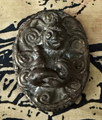
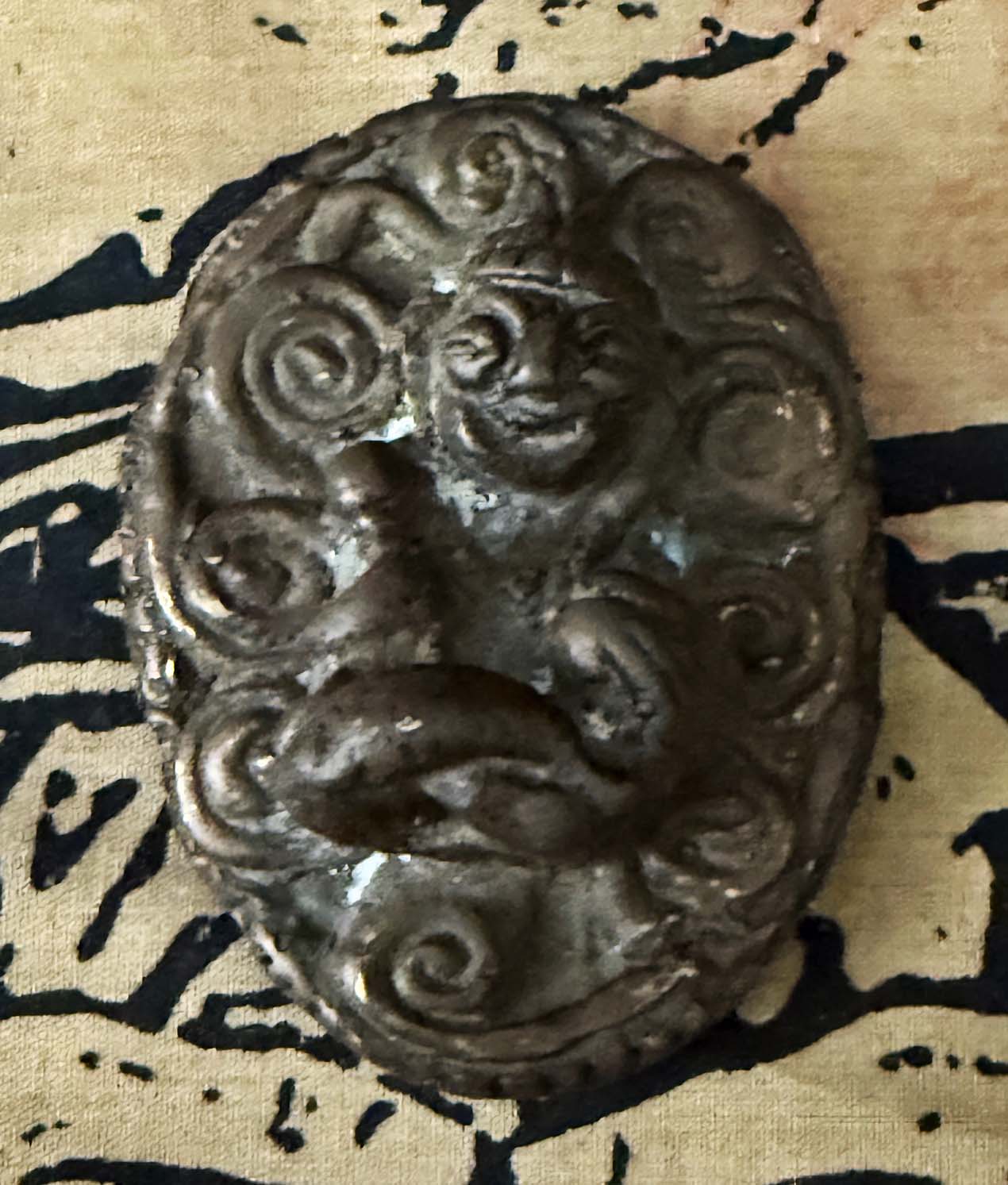
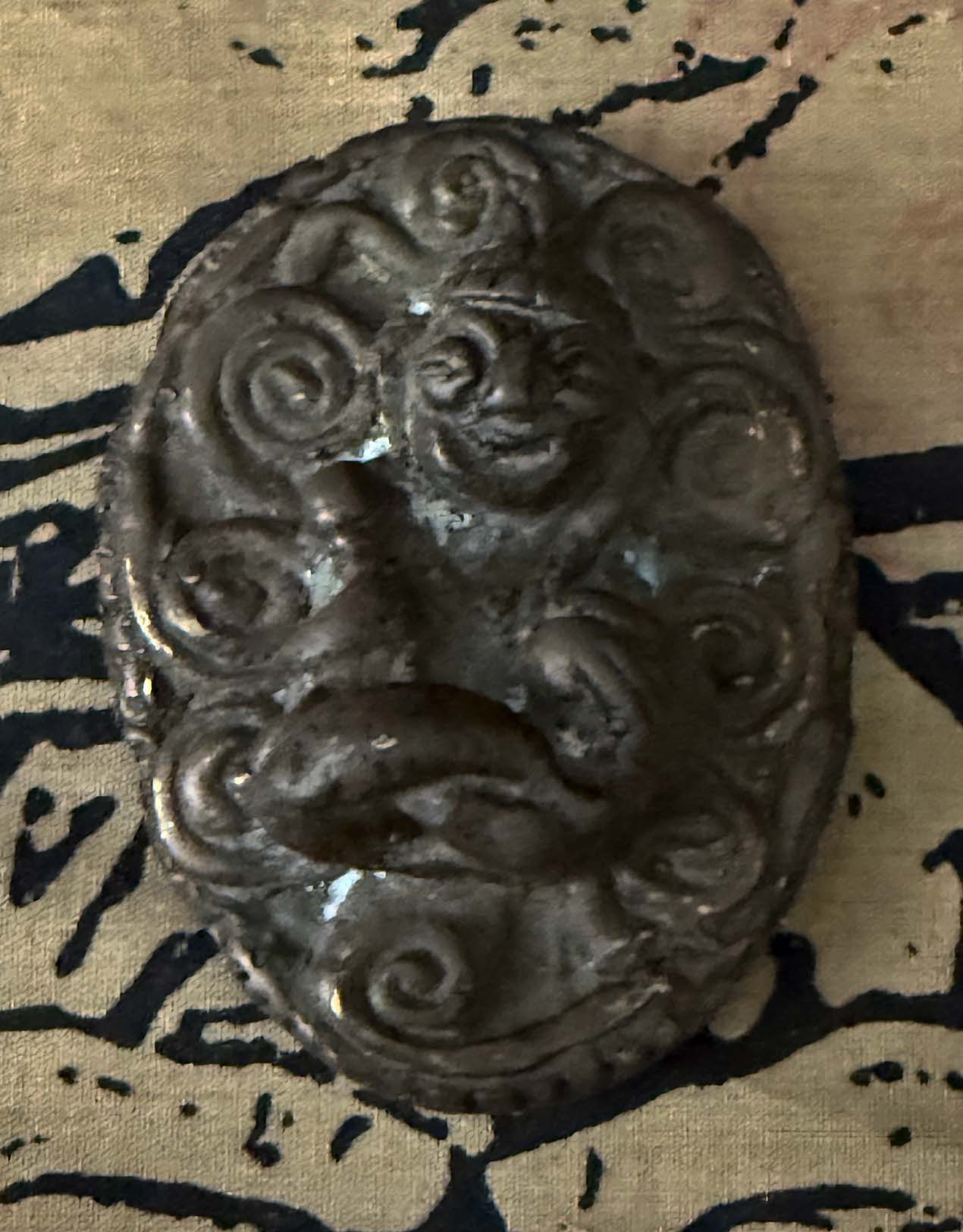
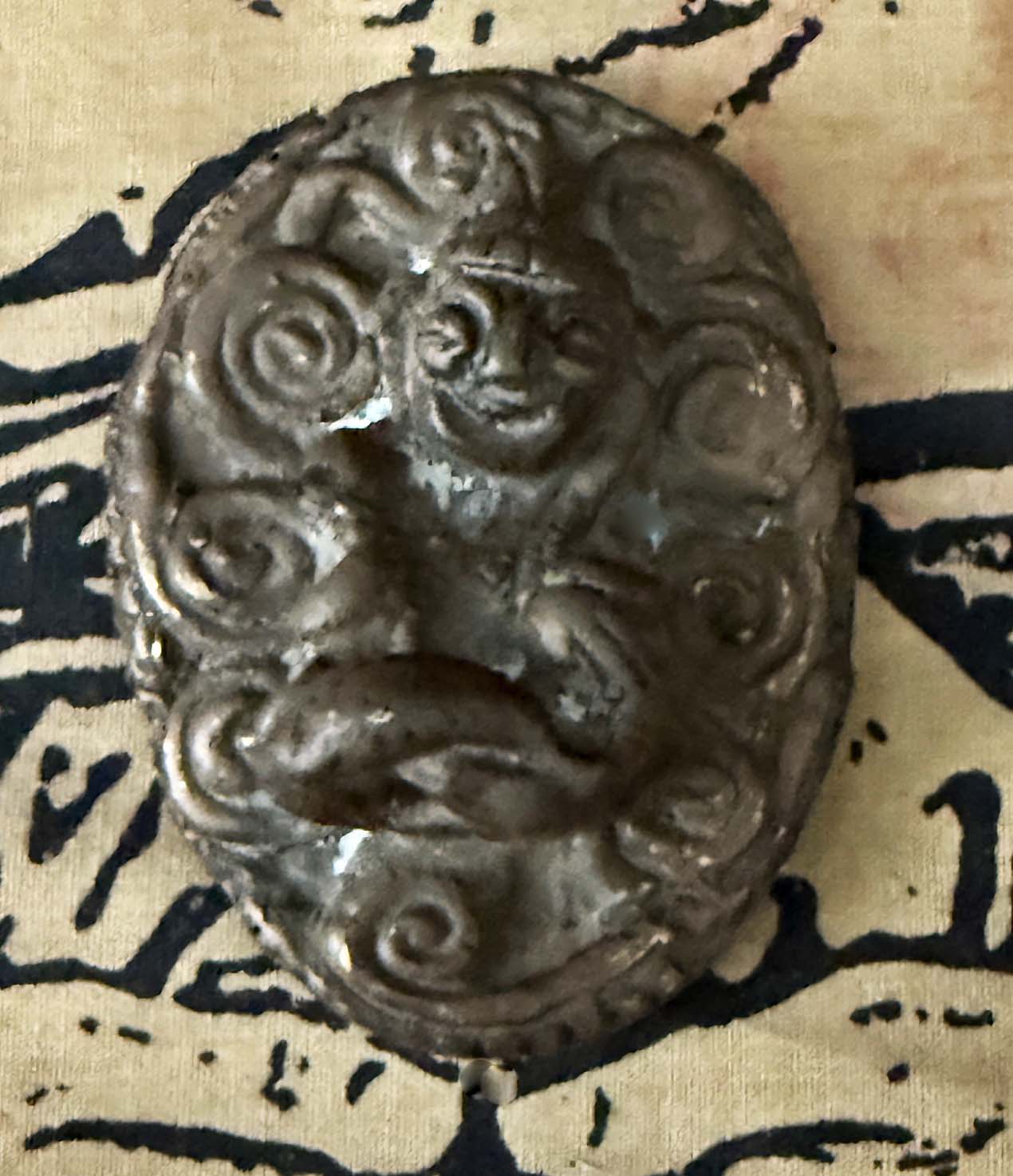
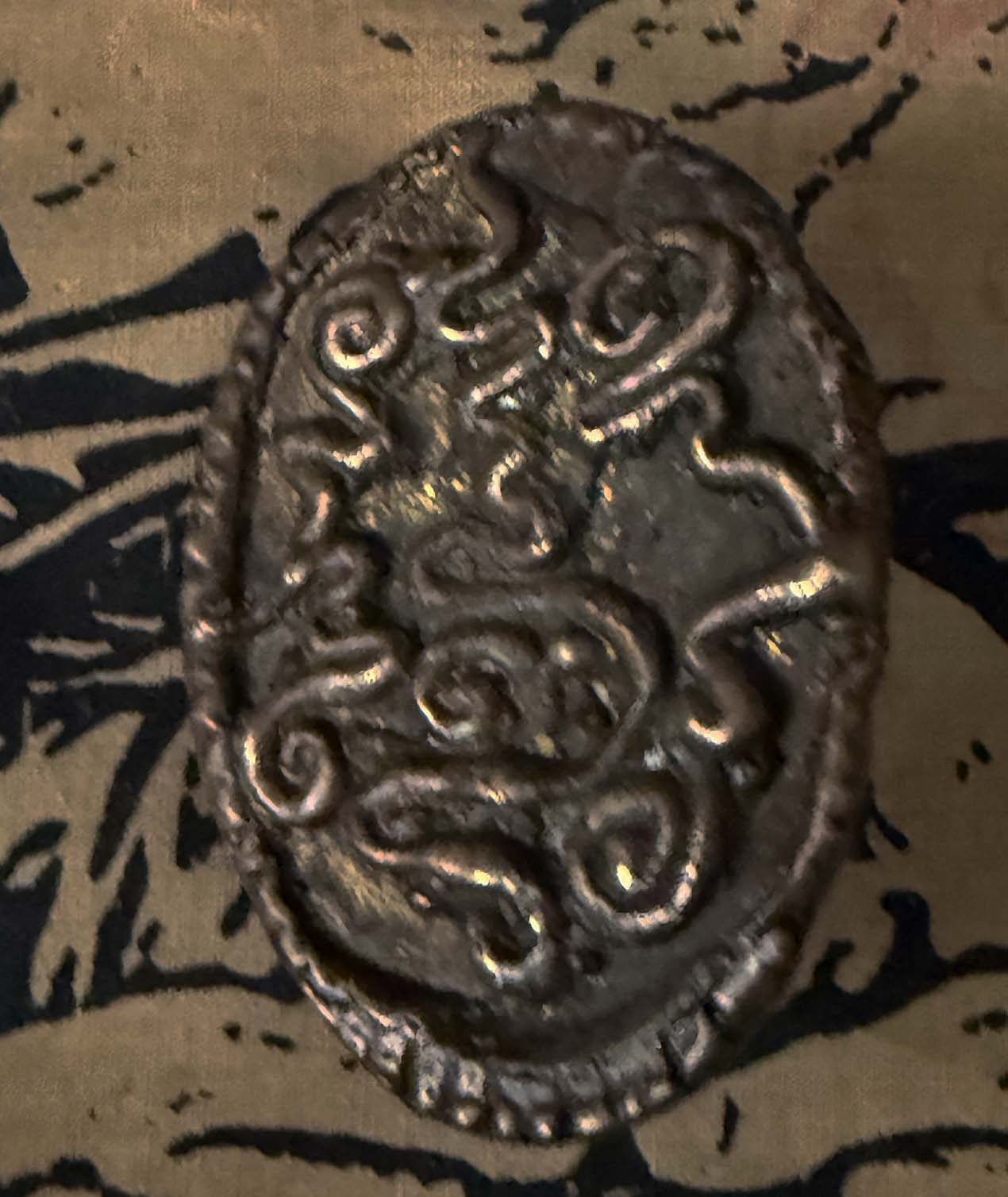
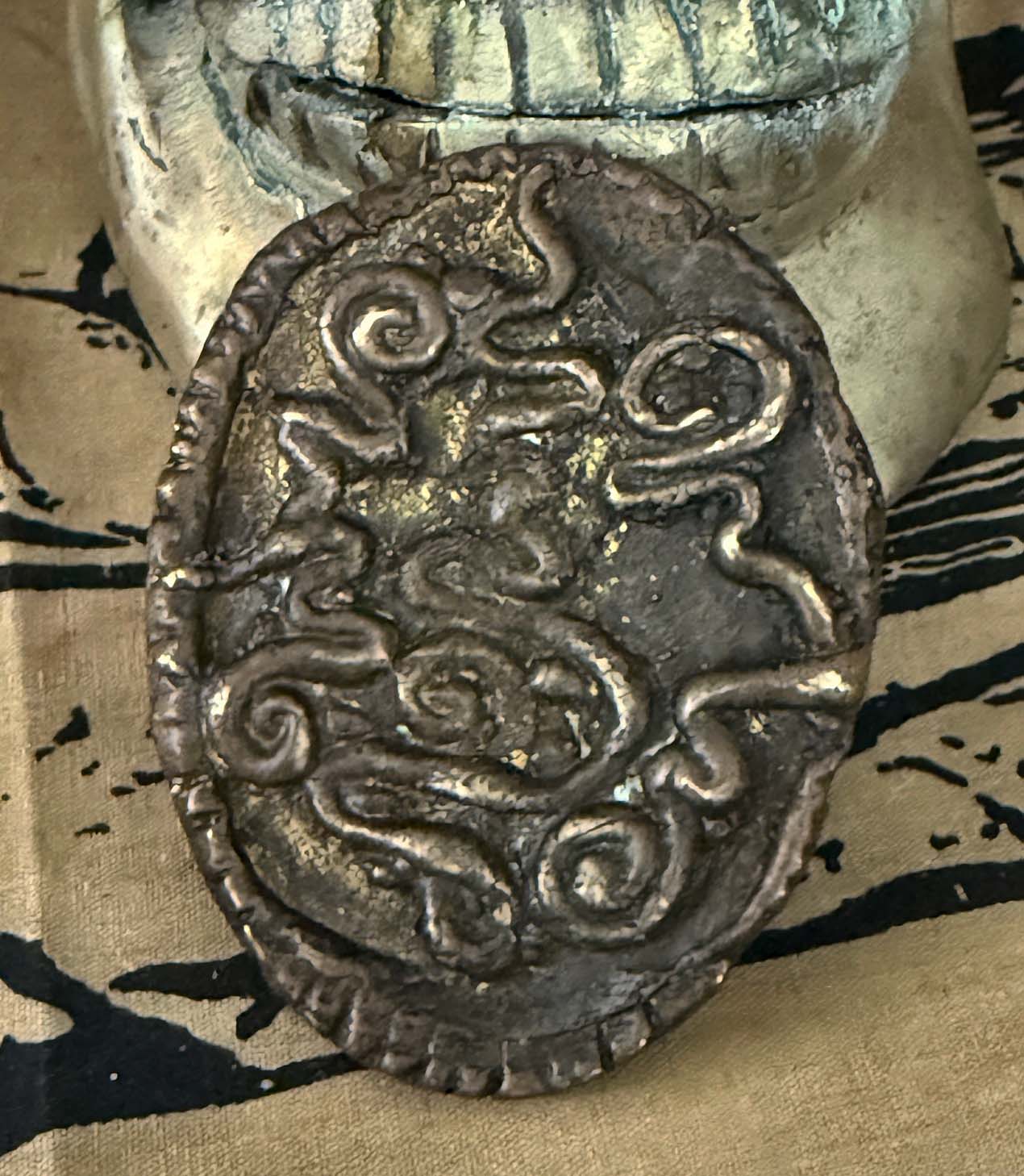
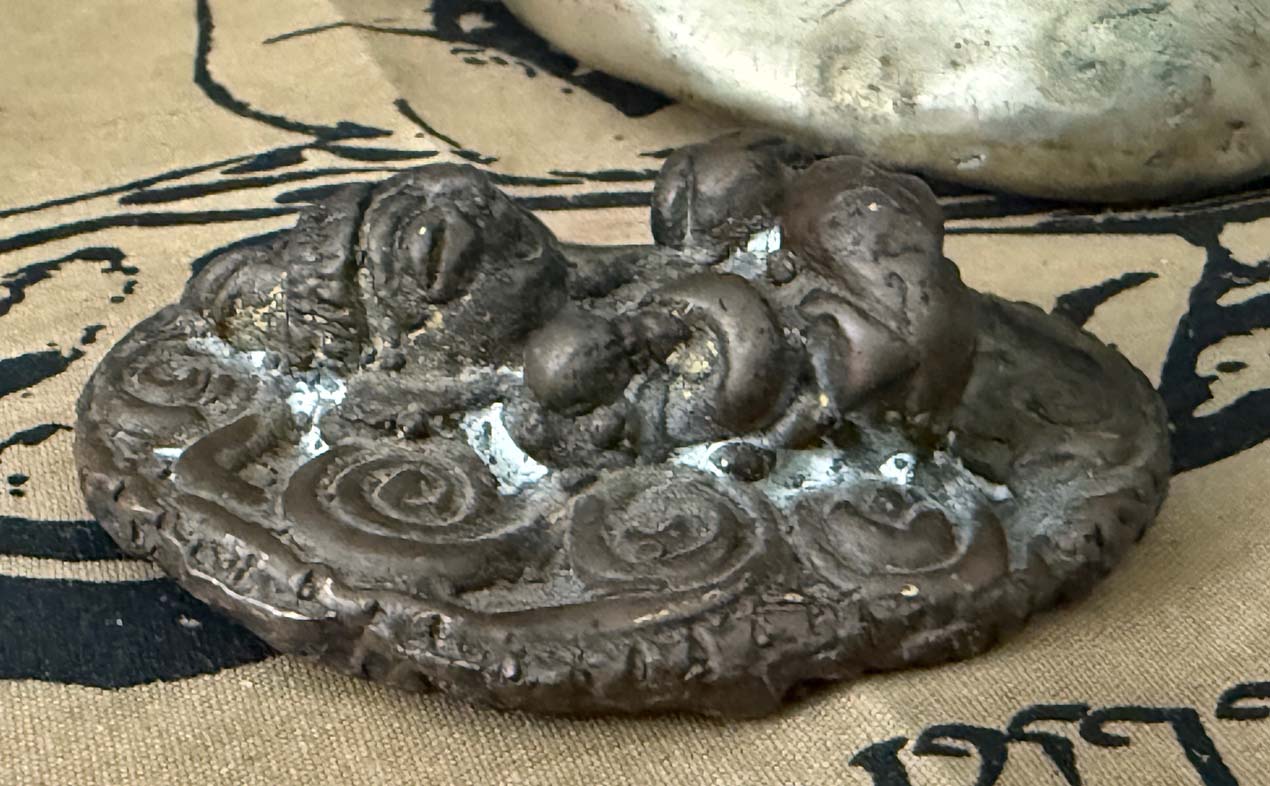
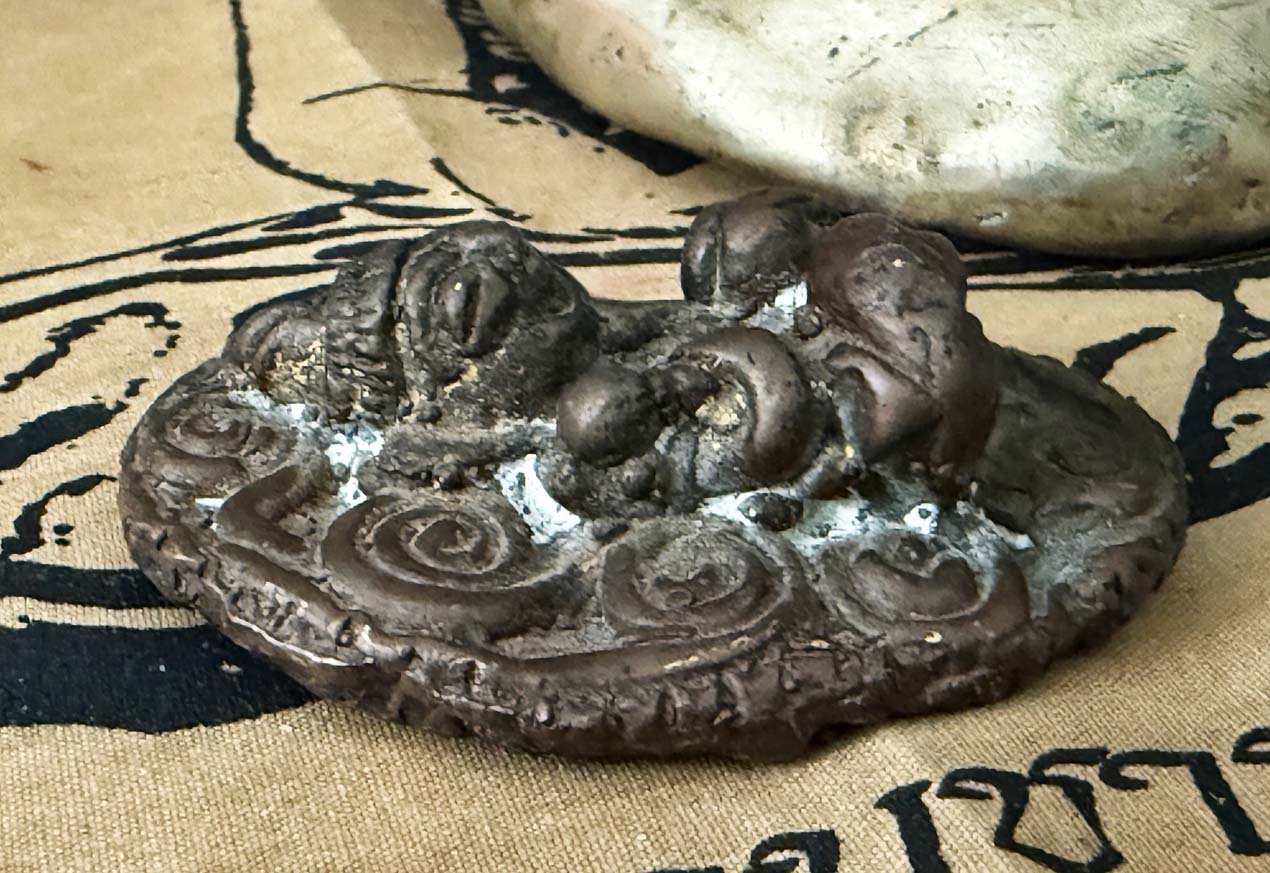
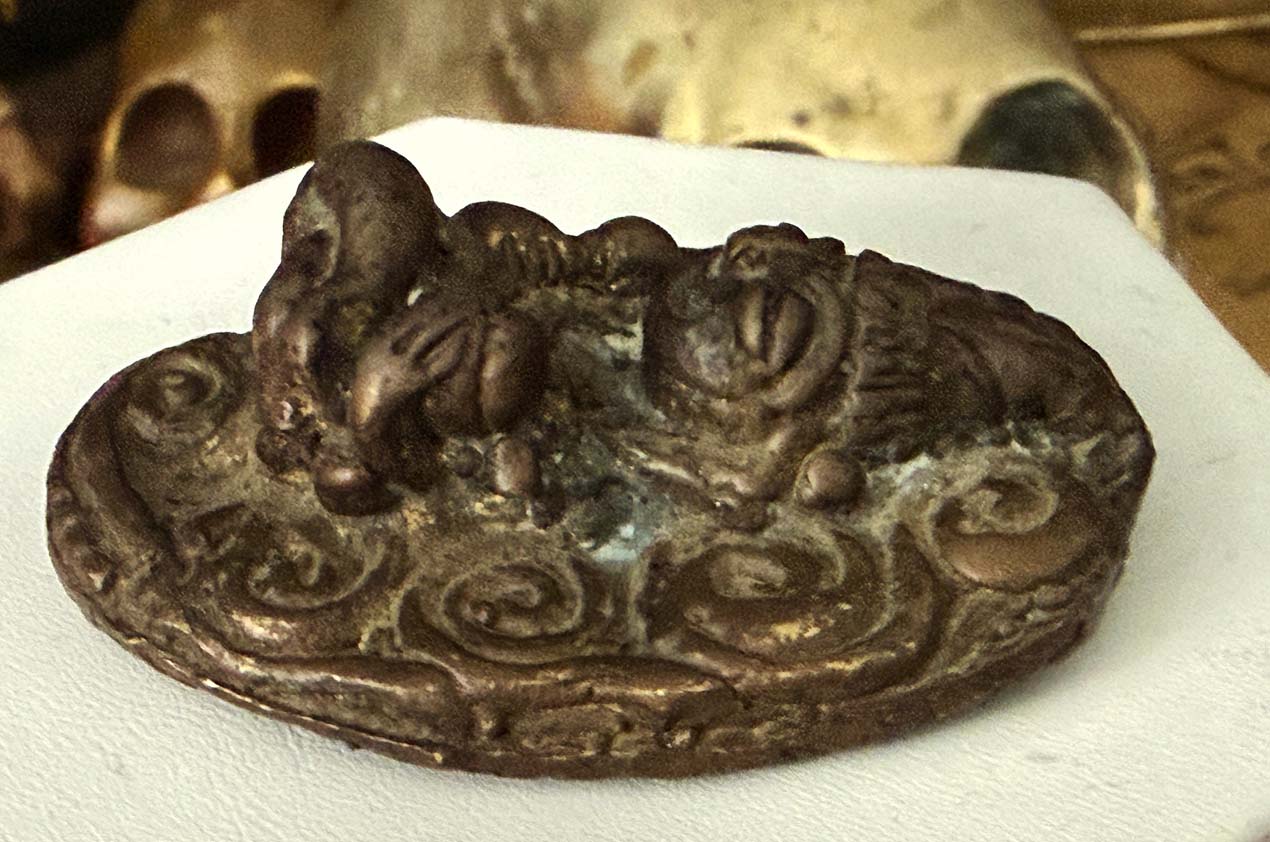
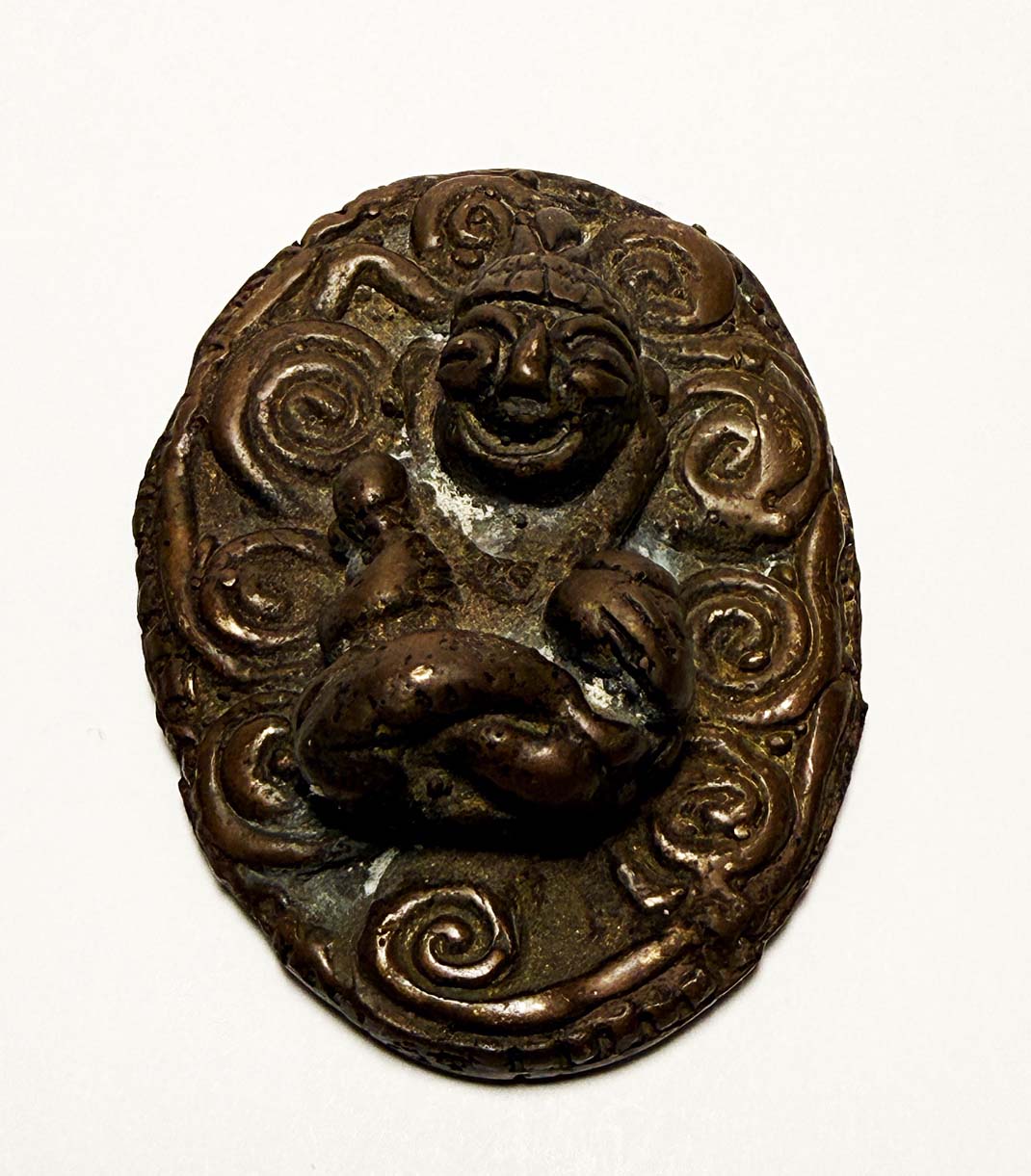
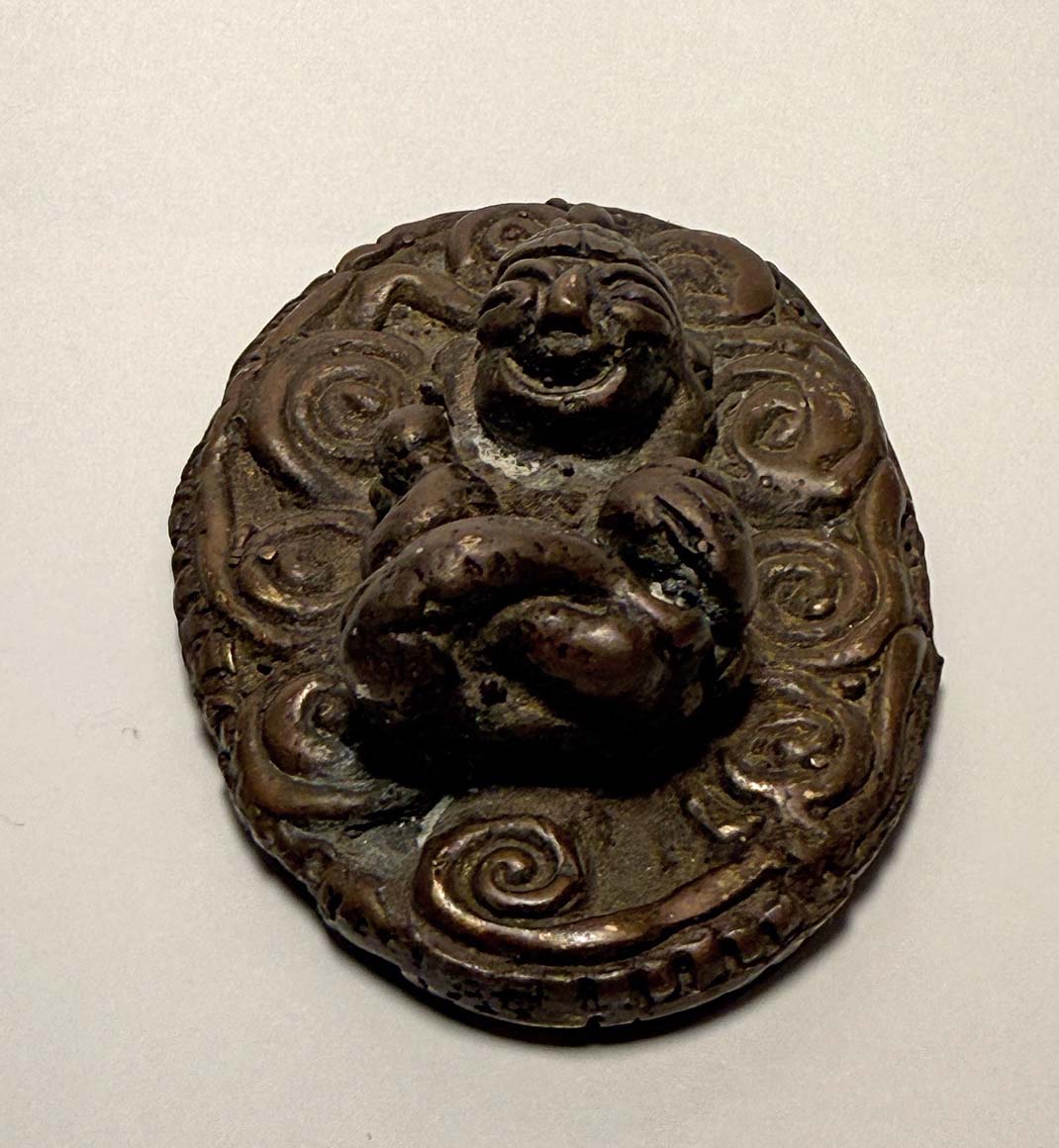
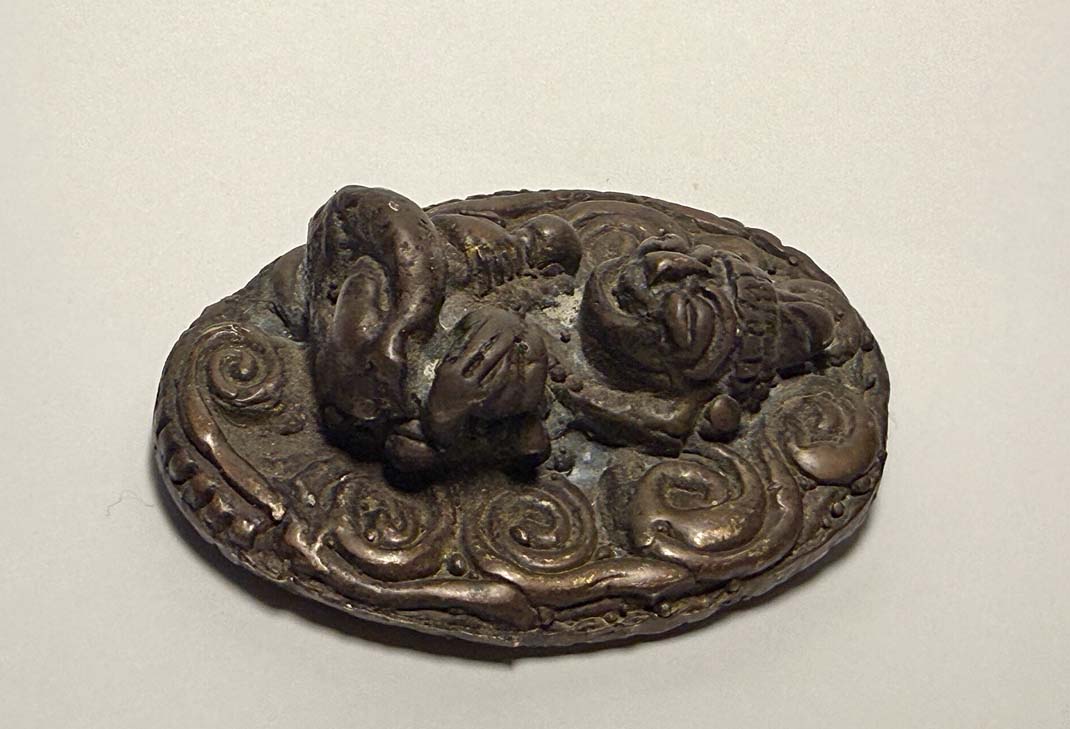
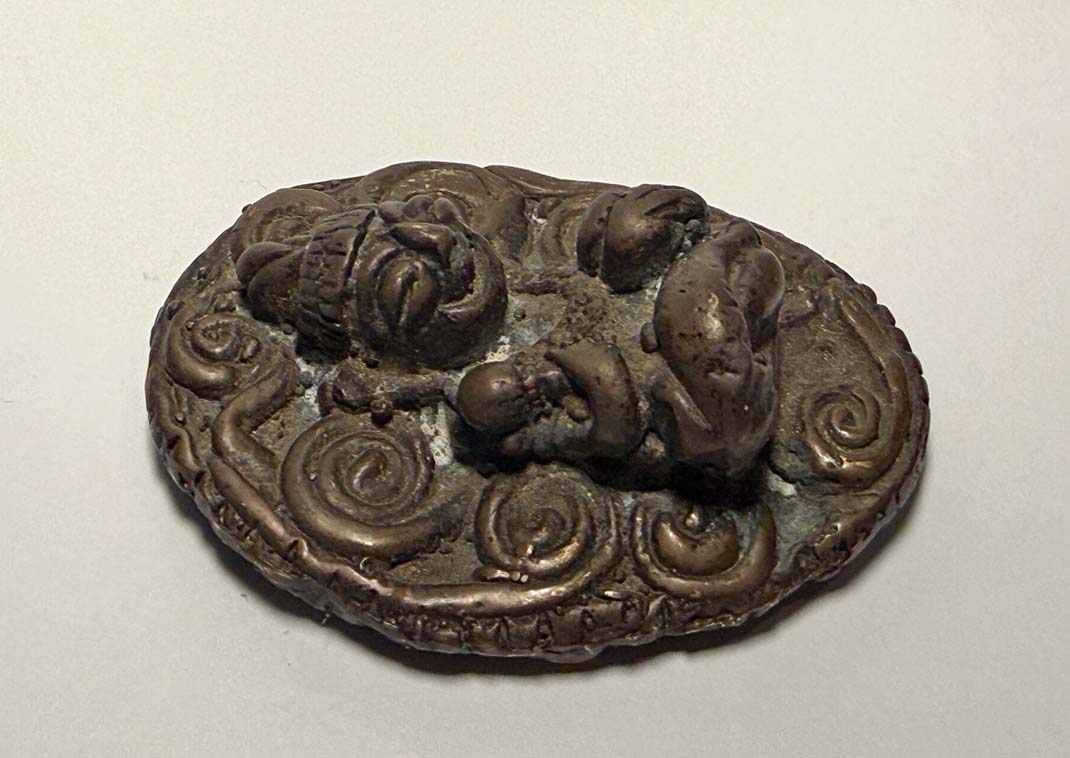
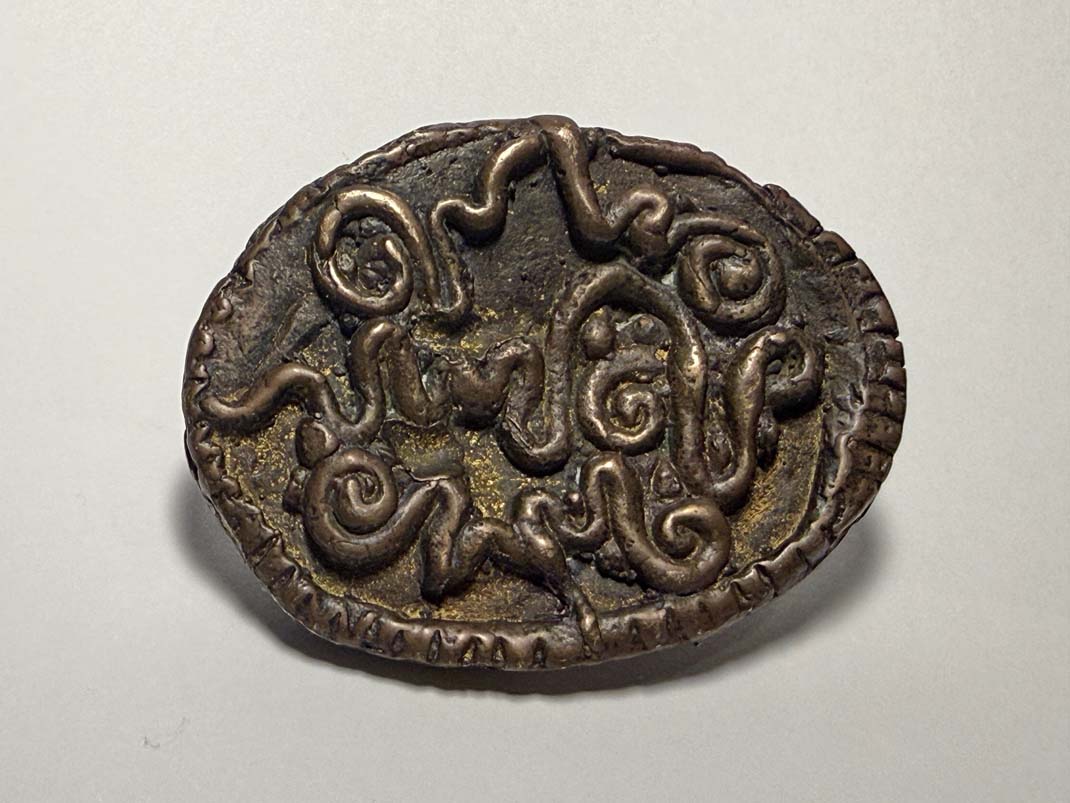
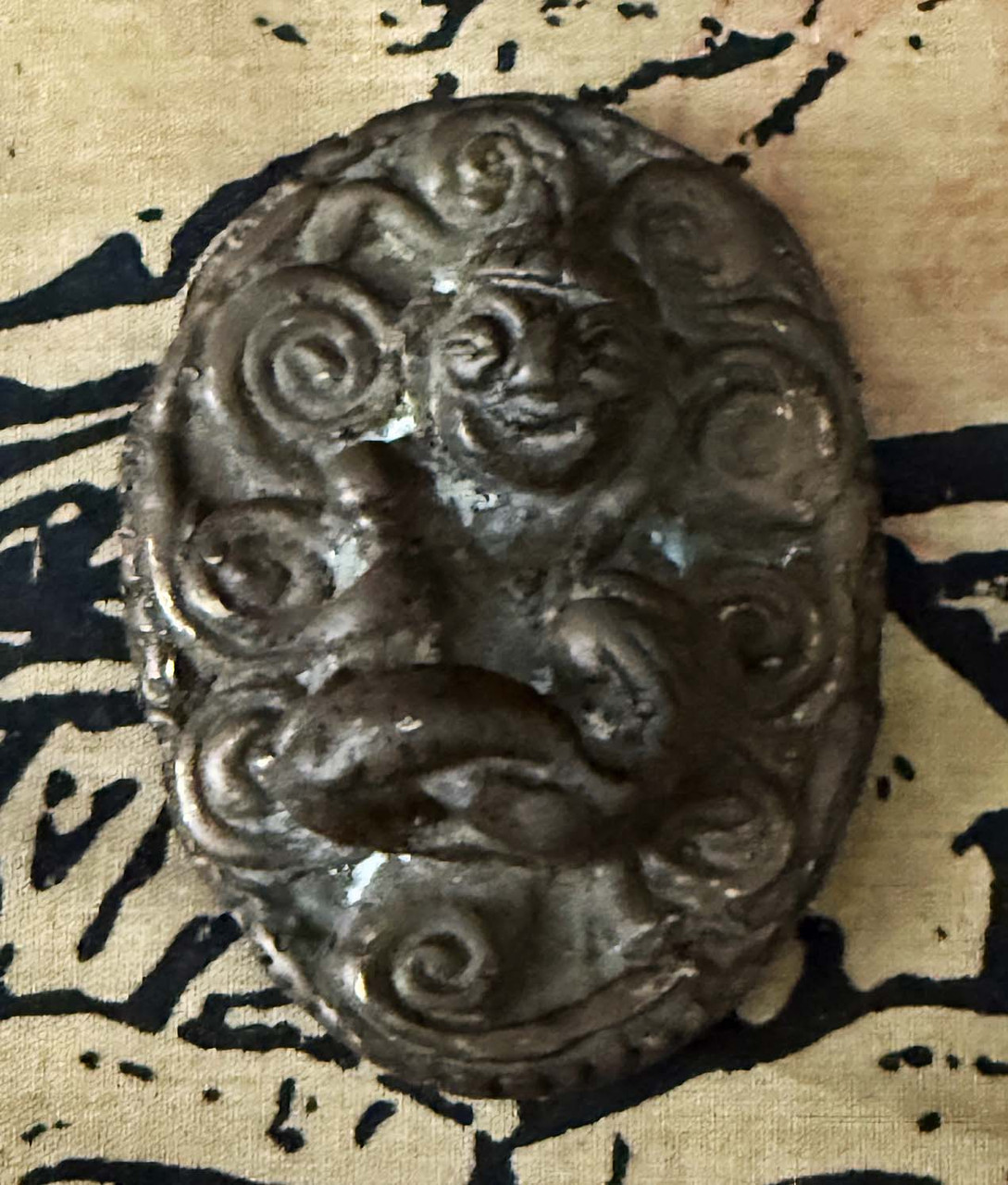
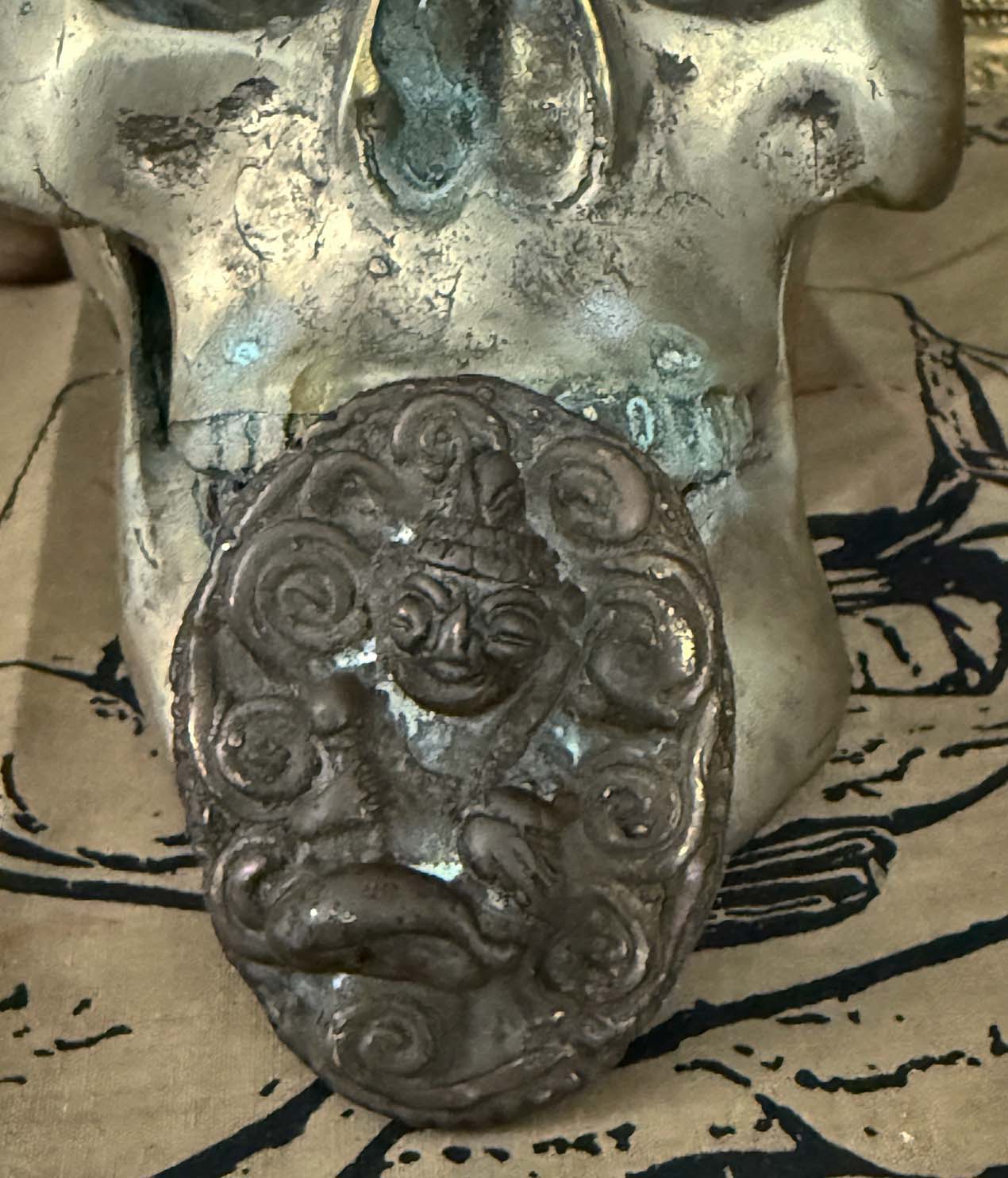
These amulets are made from a metal called Mekapat.  This is a Lead, silver, Leklai and mercury regional alloy depiction of Phra Upakut measuring approximately 2 3/8" x 1 15/16" x 15/16", weighing 109.3 grams.
.  This is an ancient recipe for material used to make sacred objects.  It was made by alloying lead, LekLai, copper, cave minerals, herbs, mercury, silver, gold, etc. or any combination thereof.  It is said to be holy material that once hardened into its permanent shape begins a maturing process of supernatural power.  Already powerful at birth, it becomes stronger with age and these amulets are well known to protect one from bodily harm or mishaps.

~!~

This is assuredly a Khmer depiction as indicated by his exagerated  penis slung on his shoulder.   Periodically we encounter one of these estate items that just will not photograph, despite our best efforts.  The twelve photographs shown below are the best of two photo sessions and bear little resemblance to the talisman in your possession.

The white dots that appear in the photos are a crystalline growth that we needed a loupe to see, yet they show prominently in the photographs.  It is not bronze disease.  Examination under a 10x loupe revealed it has a thick, hardened layer of soot, most likely caused by years of exposure to incense smoke in a close environment such as a cemetery monk's shack or a forest cave.

Their notes indicate this is a left hand held device.  One journal entry reads, "Held with the base up, head down, facing forward, positioning the thumb in the indent, finding a comfortable position to direct the energy with the middle finger supporting the body and the index finger about the head as a trigger."

."It is certainly an unusual Buddhist artifact with an extraordinary provenance that is much nicer than the photographs are able to depict.
 

~!~
 
 These excerpts from the written statement of one of the principals who recovered this item; "When we first entered this room we used pocket led flashlights, commonly known as tactical lights, this room lit up like a light show as we directed the beams, the three of us said "did you see that?"  Among other things."
 
"When we ran 2000 watts of light down there, the lights shut down, period.  They just would not work in the room.  We checked the generators and the lights worked fine out of that room, but in it, no go.  Regular, battery operated flashlights went dead in there too, fresh batteries went dead in a second."
 
   To date, Energizer has not responded.
 
Little more thought was given this until one of us more or less became the caretaker of this lot, more because he was the only one able to get to the warehouse alcove where the balance of this estate was kept.
 
Although the photographers are no longer using or commenting on the use of directed, high intensity LED, Infra-red and ultraviolet lighting in  the photo sessions of these artifacts, the staff member who retrieved many of these items from "the hole", the warehouse alcove where the balance of the items from this estate are being stored, offers some insight as to what has transpired.
 
"It was typical to be back there and have the power go out, but this can easily be attributed to our weather conditions and sorry excuse for a power company, but I had taken one of my pocket tac-lights with me and the first time I used it back there was, well, nothing short of phenomenal and overwhelming.  This is not a joke, they like the light!"
 
~!~ 
 
We have been contacted and visited by a number of people who were interested in the items from this estate since our first batch was listed.  Among the buyers have been known psychics and practitioners.  More than one, after adorning themselves or handling their purchase, stated "this is a woman of power!"  Many of our customers, after receiving items from this estate have reported dream contacts and other unexplained phenomenon.
 
Unusual, authentic Voodoo Priestess Estate piece and at a bargain price!
 
This is truly a rare opportunity to own anything with attributes to this estate.  The majority of this estate is now gone.  Most of what we had left, and it was considerable, has been split up and sold to a couple of private, foreign collector practitioners and will never be available to the public again.  We made the decision to do this as we have had some pretty strange visits from even stranger individuals and there have been enough unexplained phenomenon going on in the warehouse where her things were kept that many of our employees refused to go in there.
 
The pieces offered and sold here are some of the few remaining that will ever be offered to the public.
 
Nice addition to any collection, altar, wardrobe or decor, displays really well.
 
Really doesn't get any better than this.
 
There are 14 photographs below to tell the rest of this tale
 
Buyer to pay $0.00 for Insured Ground Shipping with Tracking, handling and lagniappe.

Rest assured your order will be carefully packed to withstand the onslaught of the most deranged of parcel carriers.
 
International Buyers, Please email us for a Shipping Quote.
 
Check our other listings as new items are usually listed daily.
 
Payment is due at listing end.
©Text and Photos Copyright 2001-2026 bushidobuce, all rights reserved. 
~!~

Props are not part of the deal, but you knew that already.

~!~


Find Similar Products by Category

Write your own product review

Product Reviews

This product hasn't received any reviews yet. Be the first to review this product!