Loading... Please wait...
Categories
 New Products
-
 $89.90
-
 $89.90
-
 $149.90
-
 $49.90
-
 $494.90
Our Newsletter
- Home
- Oddball Rings
- 1888 LiDiex, Strega Maria's Nazi Officer Coin Silver Memento Mori Totenkopf Death Worn Ring - The Voodoo Estate
1888 LiDiex, Strega Maria's Nazi Officer Coin Silver Memento Mori Totenkopf Death Worn Ring - The Voodoo Estate


)
Product Description

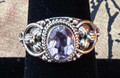
1888 LiDiex, Strega Maria's Nazi Officer Coin Silver Memento Mori Totenkopf Death Worn Ring
~!~ The Voodoo Estate!This type of call usually gets us excited as they are a treasure trove. Located here in Florida, there was no electricity or running water so we rigged our own lighting and in we went. If you have ever seen the Adams Family you will have some idea as to what we were greeted with! Then the attorney handling the liquidation gave us some background. The estate had belonged to an alleged powerful Voodoo Priestess/JooJoo Exorcist, grand daughter of a Marie Laveau, and favored daughter of a Marie Glapion.These names meant nothing to us, but the late night talk of Voodoo and exorcism in the old mansion was enough to make us decide to spend the night in a hotel and return in the morning to assess the estate. The rest is history.Some Back StoryFound in what was named, "The LiDiex Chapel Room." This was not the largest of the altar rooms but large nonetheless, as it measured 17 x 24 feet! But, it certainly was an unusual room that in describing, we could just as well be describing an ancient Cabinet of Curiosities. It was indeed used as their chapel, "A place of solace and meditation where ancestors are revered," according to one of her journal entries.She goes on to quote Tertullian from his Apologeticus, “Respice post te! Hominem te esse memento! Memento mori!" Which translates as, "Look behind you! Remember that you are but a man! Remember that you will die!"
This is a vast subject, far too involved to detail here in this already overlong text, but we wholeheartedly recommend you research this on your own. It is a fascinating, multi-cultural study and we will be glad to field your questions.
She also tells us they would meditate while wearing this ring to treat, "outside negative influences" that had affected, or entered through specific organs, body parts, or subconscious due to traumatic past life events, which she claims, "the wearing of the ring while reciting prayer will readily alleviate." As stated above, it is one of a handful of companion pieces that were associated and/or used in life, by some of the residents of this estate. The Silver
More often than not, their metal of choice was silver as she notes, "Silver is the mirror of the soul related to the moon energies. It strengthens connections of the astral and physical bodies. A metal unmatched in its psychic energies and healing abilities, I have used it as a spell medium, to heal the speech impaired and to help public speakers achieve eloquence. Induced into the drink, it has expelled the toxins that caused headaches, arthritis, intestinal and blood disorders. More importantly it attracts, enhances and stores energies of gemstones, driving out negative energies the stone may have absorbed."
~!~
Their journals, and her inventory tell us the ring was brought to the estate by the 1888 LiDiex.
1888 LiDiex
 The research involved in this estate provides continuous fascination. The procurer and an end user of this ring was a man known only as "LiDiex," a 4th. generation descendant of the original Man Known Only as "LiDiex" to these shores who arrived as survivor and saboteur of the slave Ship Henrietta Marie in 1701, who found his way to New Orleans to meet with the parents of the then infant grandmother of our priestess, Marie Laveau.
Their journal entries tell us this sabotage was accomplished by a spell using egg shells, and certain folklore concerning egg shells give credence to this. He made his way in life as a wood carver, furniture, and cabinet maker as did many of his descendants. This is another case of the multi-generational relationships we have encountered with this family as the LiDiex all had a strong association with these women.
Although not considered a full time resident, he kept a suite of rooms with her from the time of his sixteenth birthday. Apparently he would leave for periods of up to a decade at a time before returning, shutting himself in her estate for years before leaving again. He is attributed with the design and consecration of the, "Resurrection Skull Altar" and most of the ceremonial spells used with it. Her journals and those of a number of her live in practitioner followers tell of this altar being used in ritual resurrection ceremonies. There are some pretty fantastic tales of animating inanimate objects, most notably a number of articulated skulls using specific minerals, potions, elixirs, reptiles, chants and incantations.
He is described in her journals as being, "in excess of six feet of sinewy muscle, deceptively strong, easily matching two of his size in their grappling", and "extensively shaved, tattooed and pierced."
"Those eyes of azure that turn to pools of deep amethyst", in addition to, "shown to be capable of high magic without devices."
Both their journals claim his ability to heal wounds, shape shift, create life with the power of his thought, telepath, and travel through time and space. They also corroborate the sharing of identities with a number of other LiDiex, "being a master of disguise and misdirection, often with his mere thought", according to these entries. This gave these men the ability to appear in two places at once, an old family ploy that was apparently often used by their Mistresses.
It is this LiDiex who is attributed with making her introduction to Alexandra David Neel and his journals tell of numerous meetings and short adventures with her. Claiming at the age of twenty four to have met Neel for the second time in the company of Prince Sidkeong of Sikkim and of being her teacher of the Tibetan language having already spent six years with the Great Hermit as apprentice.
Much is already written on these subjects, so there is no need to elaborate here in this already overly long text, but we wholeheartedly recommend a cursory search for some very interesting reading.
~!~
But Back to the Ring
Their journals go on to tell us the ring is one of four obtained by this LiDiex from a Strega, a witch of the Italian Alps she names as, "Maria the Strega" during their visit to her Villa in 1938. The rings were all trophies, taken from the bodies of murdered Nazi officers! We also recovered six handguns, four, Luger, and two Walther semi-automatic pistols with Nazi markings that were attributed as evidence of Maria’s kills of Nazi officers before she went into hiding, She was eventually apprehended crossing the Swiss border and killed. Examination reveals what we believe to be a post WWI era relic as indicated by what has been determined to be 1927 German Coin silver with a Trojan Horse and a stylized Aries symbol depicted on the shank. The ring bears the Totenkopf motif and is marked unmarked with no maker's or assay marks and tests at .500 Silver Standard. It is a ring size 13 3/4 and the ring face measures approximately 1" x 9/16" x 3/16" and weighs 4.1 grams. ~!~ .500 (Silver Purity): This is a silver fineness of 500/1000, composed of 50% pure silver alloyed with 50% other metals for durability.This is a specific purity standard that is lower than sterling silver (925), and was widely used in German coinage circa 1927/1933. ~!~ Totenkopf From Wikipedia, the free encyclopedia, for the most part; Totenkopf (i.e. skull, literally dead's head) is the German word for the skull and crossbones and death's head symbols. The Totenkopf symbol is an old international symbol for death, the defiance of death, danger, or the dead, as well as piracy. It consists usually of the human skull with or without the mandible and often includes two crossed long-bones (femurs), most often depicted with the crossbones being behind some part of the skull. It is commonly associated with 19th- and 20th-century German military use. Toten-Kopf translates literally to "dead's head" meaning exactly "dead person's head." Semantically, it refers to a skull, literally a Schädel. As a term, Totenkopf connotes the human skull as a symbol, typically one with crossed thigh bones as part of a grouping.
Contemporary German language meaning of the word Totenkopf has not changed for at least two centuries. For example, the German poet Clemens Brentano (b. 1778 – d. 1842) wrote in the story "Baron Hüpfenstich": "Lauter Totenbeine und Totenköpfe, die standen oben herum ..." (i.e. "A lot of bones and skulls, they were placed above ...").
The common translation of "Totenkopf" as death's head is incorrect; it would be Todeskopf, but no such word is in use. The English term death squad is called Todesschwadron, not Totenschwadron. It would be a logical fallacy to conclude that usage varies only because of the German naming of the Death's-head Hawkmoth, which is called Skull Hawkmoth (Totenkopfschwärmer) in German, in the same way that it would be a fallacy to conclude that the German word Nachtkerze (i.e. night candle) would mean Willowherb, just because the Willowherb Hawkmoth (Proserpinus proserpina) is called Night Candle Hawkmoth (Nachtkerzenschwärmer, Proserpinus proserpina) in German.
Use of the Totenkopf as a military emblem began under Frederick the Great, who formed a regiment of Hussar cavalry in the Prussian army commanded by Colonel von Ruesch, the Husaren-Regiment Nr. 5 (von Ruesch). It adopted a black uniform with a Totenkopf emblazoned on the front of its mirlitons and wore it on the field in the War of Austrian Succession and in the Seven Years' War. The Totenkopf remained a part of the uniform when the regiment was reformed into Leib-Husaren Regiments Nr.1 and Nr.2 in 1808.
In 1809 during the War of the Fifth Coalition, Frederick William, Duke of Brunswick-Wolfenbüttel raised a force of volunteers to fight Napoleon Bonaparte, who had conquered the Duke's lands. The Brunswick corps was provided with black uniforms, giving rise to their nickname, the Black Brunswickers. Both hussar cavalry and infantry in the force wore a Totenkopf badge, either in mourning for the Duke's father, Charles William Ferdinand, Duke of Brunswick-Wolfenbüttel, who had been killed at the Battle of Jena–Auerstedt in 1806, or according to some sources, as a sign of revenge against the French. After fighting their way through Germany, the Black Brunswickers entered British service and fought with them in the Peninsular War and at the Battle of Waterloo. The Brunswick corps was eventually incorporated into the Prussian Army in 1866.
The skull continued to be used by the Prussian and Brunswick armed forces until 1918, and some of the stormtroopers that led the last German offensives on the Western Front in 1918 used skull badges. Luftstreitkräfte fighter pilots Georg von Hantelmann and Kurt Adolf Monnington are just two of a number of Central Powers military pilots who used the Totenkopf as their personal aircraft insignia.
The Totenkopf was used in Germany throughout the inter-war period, most prominently by the Freikorps. In 1933, it was in use by the regimental staff and the 1st, 5th, and 11th squadrons of the Reichswehr's 5th Cavalry Regiment as a continuation of a tradition from the Kaiserreich.
In the early days of the NSDAP, Julius Schreck, the leader of the Stabswache (Adolf Hitler's bodyguard unit), resurrected the use of the Totenkopf as the unit's insignia. This unit grew into the Schutzstaffel (SS), which continued to use the Totenkopf as insignia throughout its history. According to a writing by Reichsführer-SS Heinrich Himmler the Totenkopf had the following meaning: "The Skull is the reminder that you shall always be willing to put your self at stake for the life of the whole community."
The Totenkopf was also used as the unit insignia of the Panzer forces of the German Heer (Army), and also by the Panzer units of the Luftwaffe, including those of the elite Fallschirm-Panzer Division 1 Hermann Göring.
Both the 3rd SS Panzer Division of the Waffen-SS, and the World War II era Luftwaffe's 54th Bomber Wing Kampfgeschwader 54 were given the unit name "Totenkopf" and used a strikingly similar-looking graphic skull-crossbones insignia as the SS units of the same name. The 3rd SS Panzer Division also had skull patches on their uniform collars instead of the SS sieg rune.
A skull and crossbones has often been a symbol of pirates, especially in the form of the Jolly Roger, but usually having the crossbones beneath the skull rather than behind it, as used by pirate Samuel Bellamy in one example.
The uniform of the Spanish Army's Lusitania Dragoon Regiment during part of the 18th century included three skull and crossbones in the cuffs, and in 1902 the skull and crossbones insignia was authorized again to replace the regiment number on the sides of the collar.
The British Army's Royal Lancers continue to use the skull and crossbones in their emblem, inherited from its use by the 17th Lancers, a unit raised in 1759 following General Wolfe's death in Quebec. The emblem contains an image of a death's head, and the words 'Or Glory' chosen in commemoration of Wolfe.
In 1792, a regiment of Hussards de la mort (Death Hussars) was formed to defend the young French Republic from the Austrian attempt to invade France.
Although not exactly a Totenkopf per se, the Chilean guerrilla leader Manuel Rodríguez used the symbol on his elite forces called "Husares de la muerte" ("Hussars of death"). It is still used by the Chilean Army's 3rd Cavalry Regiment.
The primarily Prussian 41st Regiment New York Volunteer Infantry, Mustered in: June 6, 1861-Mustered out: December 9, 1865 wore a skull insignia.
The Vengeurs de la Mort («death avengers»), an irregular unit of Commune de Paris, 1871.
The Portuguese Army Police 2nd Lancers Regiment use a skull-and-crossbones image in their emblem, similar to the one used by the Queen's Royal Lancers.
The Kingdom of Sweden's Hussar Regiments wore a death's head emblem in the Prussian Style on the front of the mirleton. Ramón Cabrera's regiment adopted in 1838 a skull with crossbones flanked by an olive branch and a sword on a black flag during the Spanish Carlist Wars.
Serbian Chetniks wore a death's head emblem in several conflicts: guerrilla in Old Serbia, First and Second Balkan Wars, World War I (both defense and resistance) and World War II.
The Italian elite storm-troopers of the Arditi used a skull with a dagger between its teeth as a symbol during World War I. Various versions of skulls were also later used by the Italian Fascists.
The Russian Kornilov's Shock Detachment (8th Army) adopted a death's head emblem in 1917. Then after World War I, the unit became Kornilov's Shock Regiment as a part of the White Russian Volunteer Army during the Russian Civil War.
The Estonian Kuperjanov's Partisan Battalion used the skull-and-crossbones as their insignia (since 1918); the Kuperjanov Infantry Battalion continues to use the skull and crossbones as their insignia today.
Two Polish small cavalry units used death's head emblem during Polish–Ukrainian War and Polish–Soviet War - Dywizjon Jazdy Ochotniczej (pl) (also known as Huzarów Smierci i.e. Death Hussars) and Poznanski Ochotniczy Batalion Smierci (pl).
During 1943-1945 the Italian Black Brigades and numerous other forces fighting for the Italian Social Republic, wore various versions of skulls on their uniforms, berets, and caps.
The United States Marine Corps Reconnaissance Battalions use the skull-and-crossbones symbol in their emblem.
The No. 100 Squadron RAF (Royal Air Force) continue to use a flag depicting a skull and crossbones supposedly in reference to a flag stolen from a French brothel in 1918.
The Batalhão de Operações Policiais Especiais, a special unit within the military police of Rio de Janeiro state, Brazil, uses the skull emblem to differentiate their team from the regular units.
South Korea's 3rd Infantry Division have a skull-and-crossbones in their emblem.
Many United States Cavalry reconnaissance troops or squadrons utilize a skull insignia, often wearing the traditional Stetson hat, and backed by either crossed cavalry sabers, crossed rifles, or some other variation, as an unofficial unit logo. These logos are incorporated into troop T-shirts, challenge coins, or other items designed to enhance morale and esprit de corps.
In the United States, the skull and crossbones symbol has often been used to indicate a poisonous substance.
We have also encountered this symbol at the base of certain crucifix which they refer to as "The Skull of Sidon."
The Trojan Horse Our own research revealed a book titled "Keeping the Panic Alive: German Propaganda Espionage, and Sabotage in the United States by Francis Macdonnell Pages 130–144 Published: 02 November 1995. German Biological Sabotage (1914–1915) Rather than a wooden horse, the Germans employed covert biological espionage aimed at Allied supply chains that mirrored the hidden nature of a Trojan horse. German-American agent Anton Dilger used secret laboratories (known as "Tony's Lab") to cultivate Burkholderia mallei, the bacteria responsible for glanders—a fatal, highly contagious disease affecting horses and mules. The German plot involved secretly infecting thousands of U.S. and Canadian mules and horses being shipped to Allied forces in Europe, attempting to cripple their cavalry and supply logistics from the inside. ~!~ Aryan Historically, "Arya" was a self-designation used by ancient Indo-Iranian and Vedic peoples. It meant noble or honorable. European racial theorists twisted the linguistic term into a biological one. Thinkers like Arthur de Gobineau and Houston Stewart Chamberlain argued that Aryans were the pinnacle of human development. The Nazis propagated an image of the ideal Aryan as tall, athletic, with pale skin, blonde hair, and blue eyes. However, many high-ranking Nazis, including Hitler, did not fit this description. The Nazis positioned Aryans at the top of their racial hierarchy, while others were placed at the very bottom and falsely labeled an existential threat. The word was weaponized to exclude and commit murder. Beginning with the 1935 Nuremberg Laws, citizens were required to provide proof of "Aryan" ancestry to participate in society, marry, or hold jobs. The regime went to extreme lengths to prove their myths, including sending the SS to Tibet to search for the mythical origins of the Aryan race. After World War II, the term has been largely abandoned in academic discourse due to its association with Nazi atrocities and pseudoscience. Today, it is primarily used by modern white supremacists to signal support for racist, neo-Nazi, and white nationalist beliefs. For further details on the origins and manipulation of the term, you can read the Holocaust Encyclopedia or explore the historical breakdown provided by the Wikipedia Aryan Race article. ~!~ And lastly, we must mention a recurring journal entry that reads, "Death worn, always reeks of the living imprint." ~!~ We have been contacted and visited by a number of people who were interested in the items from this estate since our first batch was listed. Among the buyers have been known psychics and practitioners. More than one, after adorning themselves or handling their purchase, stated, "this is a woman of power!" Many of our customers, after receiving items from this estate have reported dream contacts and other unexplained phenomenon. Unusual, authentic Voodoo Priestess Estate piece and at a bargain price! This is truly a rare opportunity to own anything with attributes to this estate. The majority of this estate is now gone. Most of what we had left, and it was considerable, has been split up and sold to a couple of private, foreign collector practitioners, never to be made available to the public again. We made the decision to do this as we have had some pretty strange visits from even stranger individuals and there have been enough unexplained phenomenon going on in the warehouse where her things were kept that many of our employees refused to go in there. The pieces offered and sold here are some of the few remaining pieces that will ever be offered to the public. Nice addition to any collection, altar, wardrobe or decor, displays really well. Really doesn't get any better than this. There are 9 photographs below to tell the rest of this tale. Buyer to pay $0.00 for Insured Ground Shipping with Tracking, handling and lagniappe. Rest assured your order will be carefully packed to withstand the onslaught of the most deranged of parcel carriers.  International Buyers, Please email us for a shipping quote. Payment is due at listing end. Check our other listings, and sign up for our newsletter as new items are usually posted daily. ©Text and Photos Copyright 2001-2026 bushidobuce, all rights reserved. 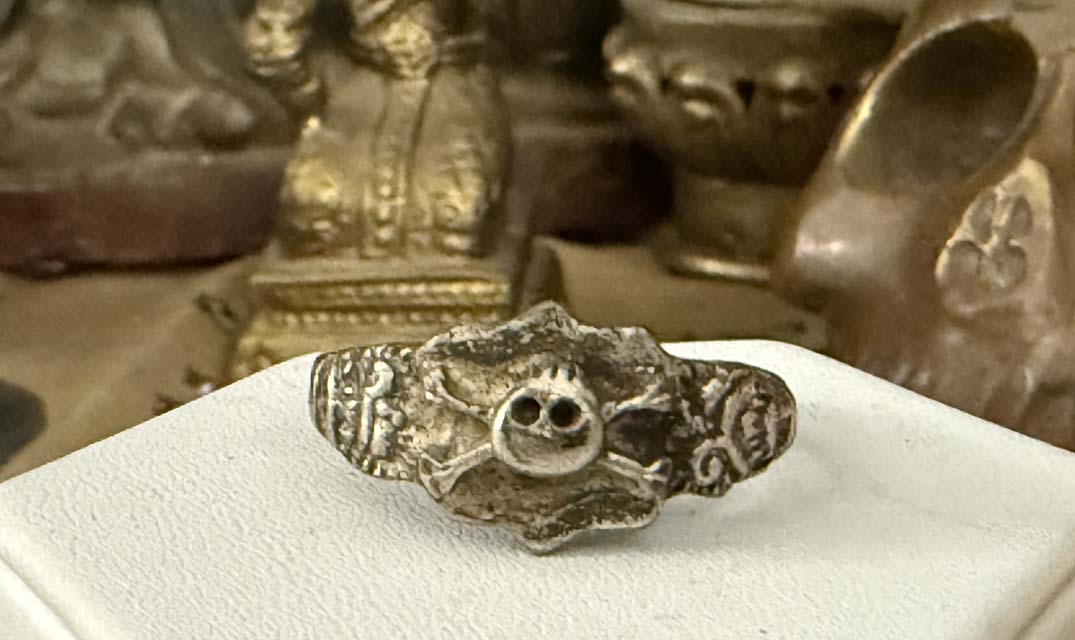    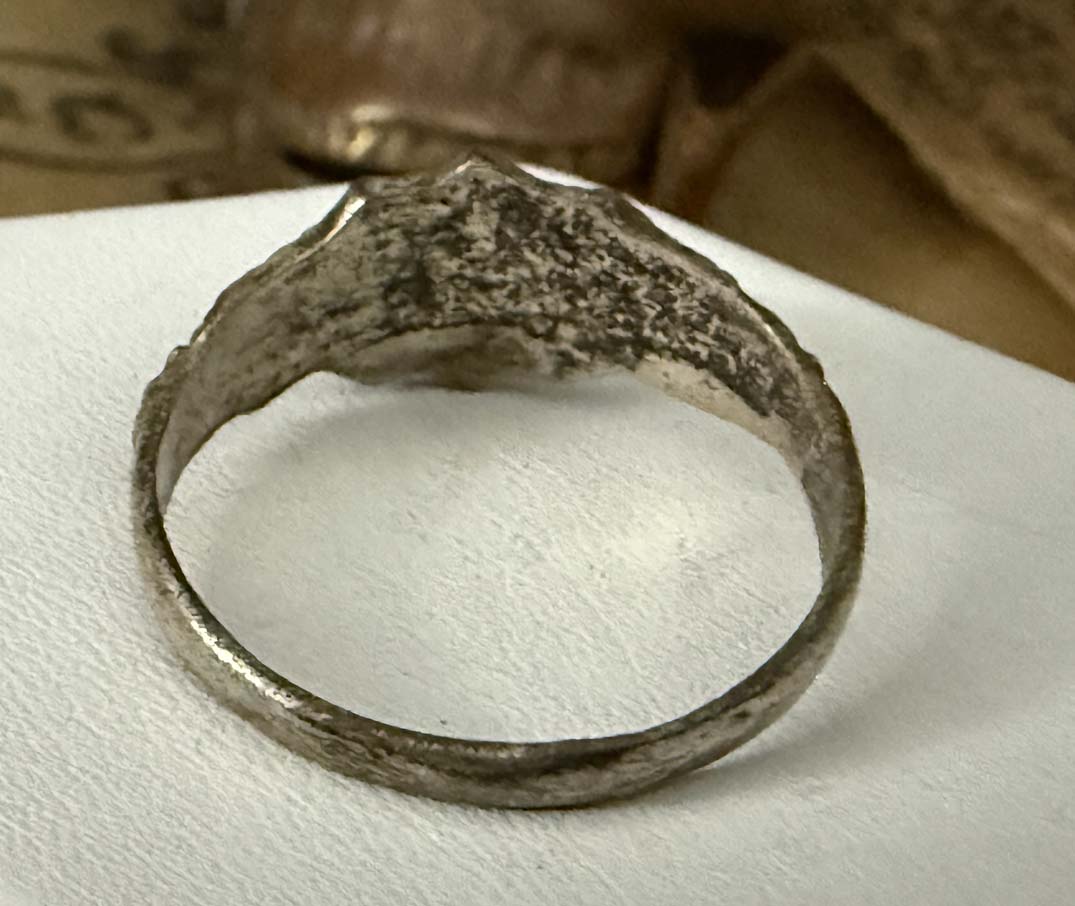 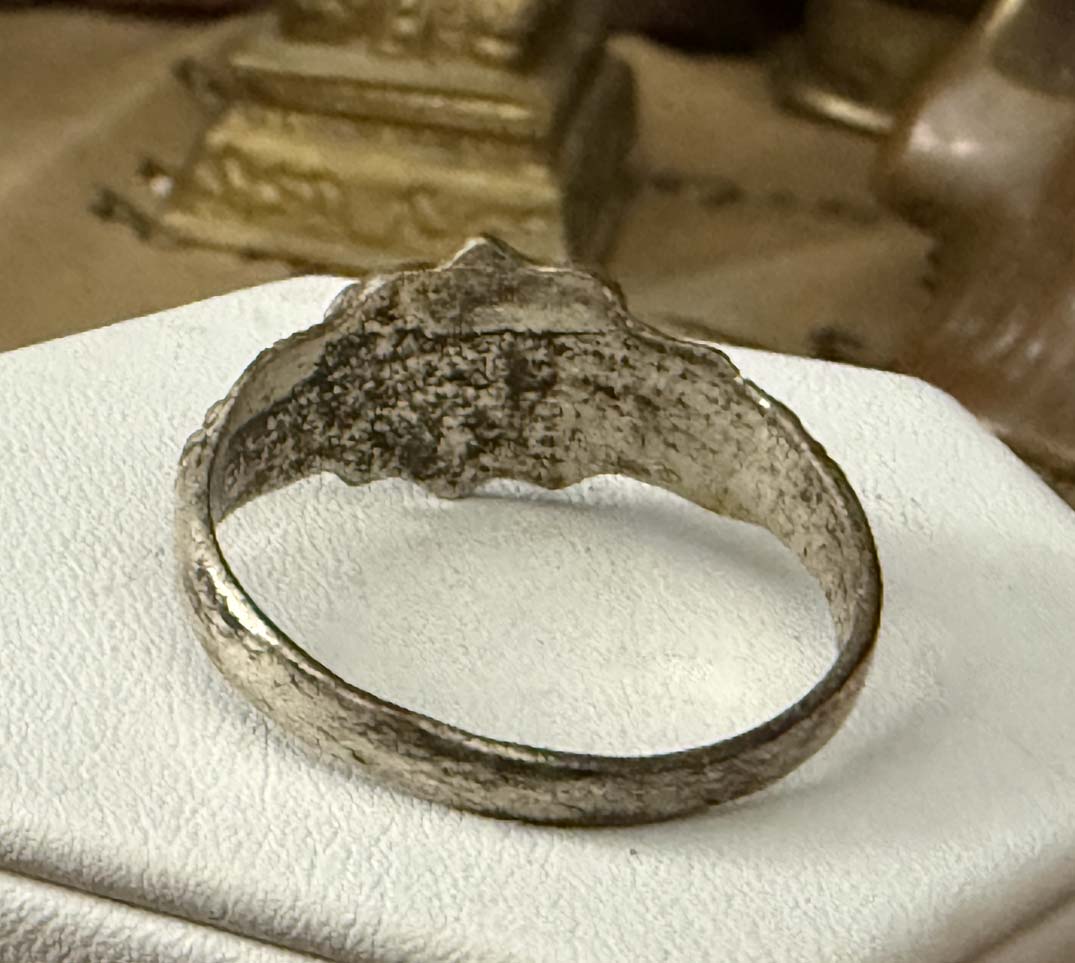  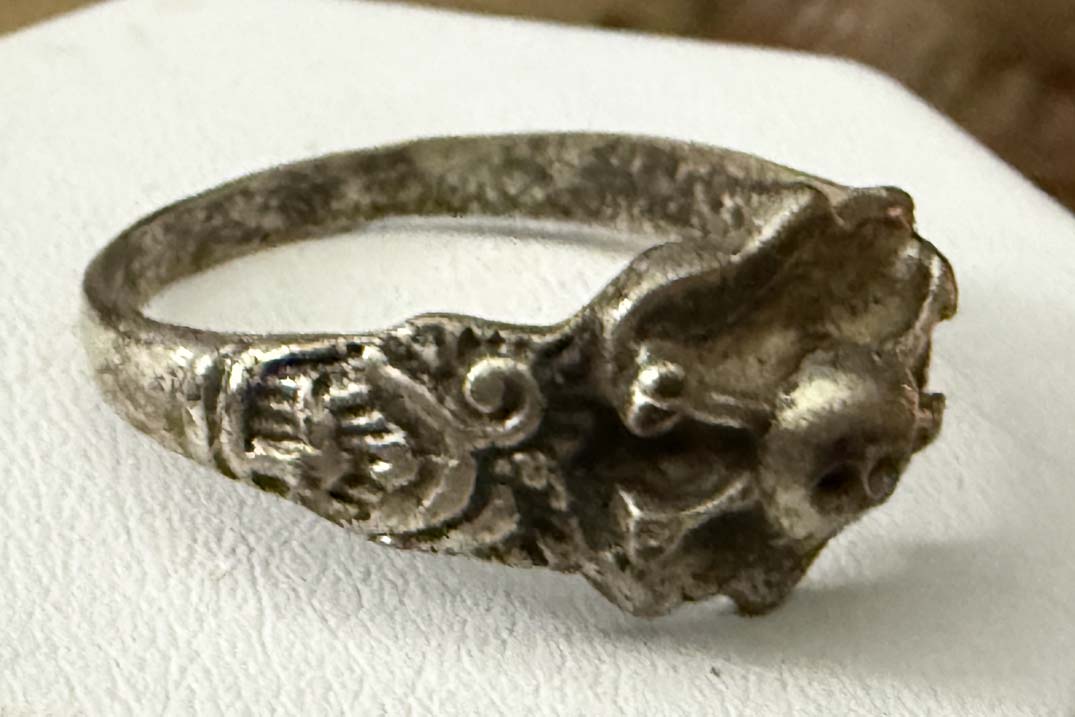 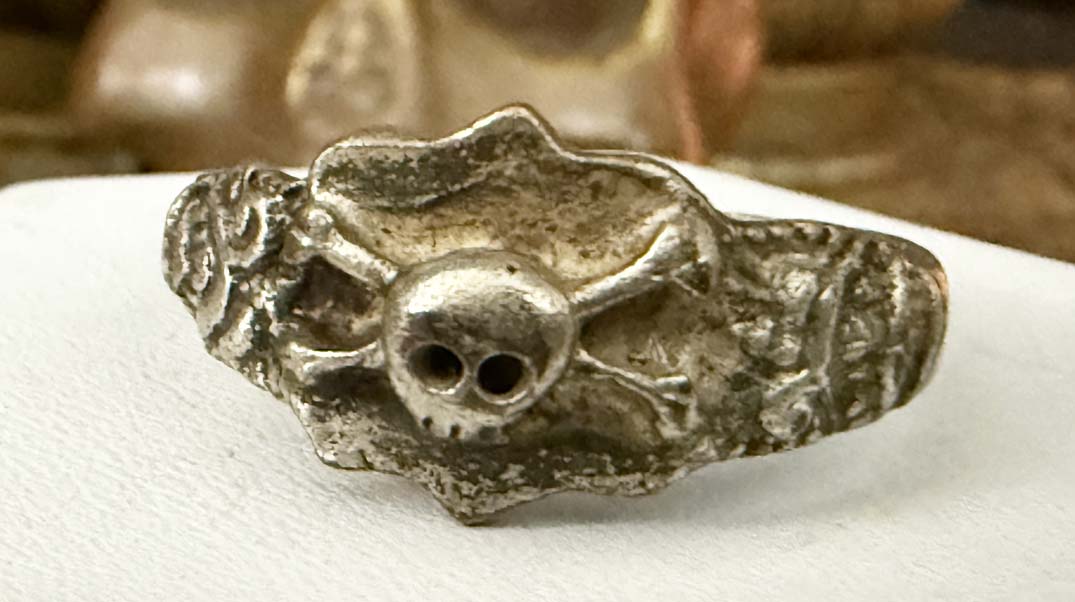 \ |